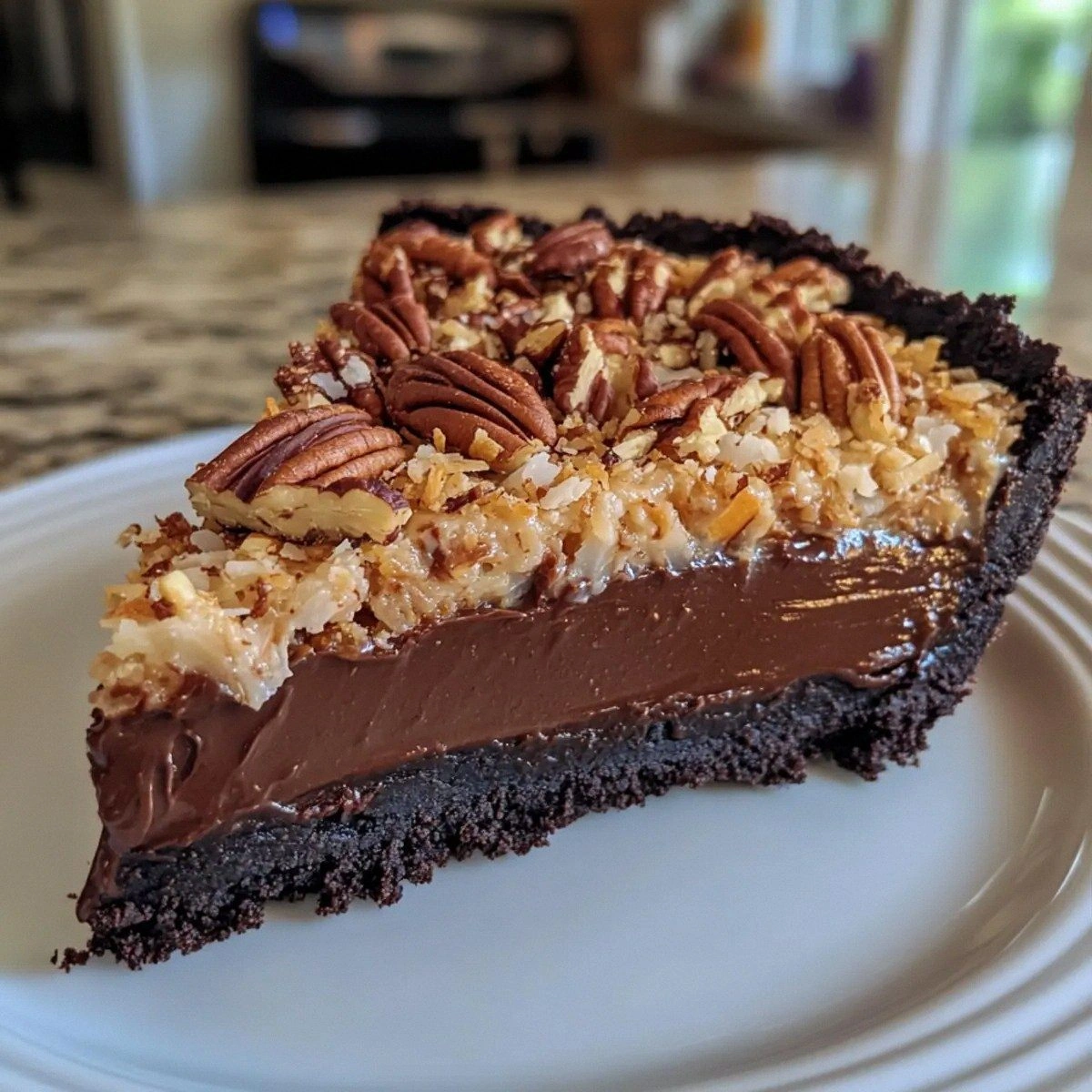
Okay, picture this: I was halfway through a scorching July afternoon, the kind where the air feels like a warm blanket you can’t shake off, when my roommate dared me to create something that would make us forget the heat altogether. “Make a dessert that doesn’t need an oven,” she said, half‑joking, half‑serious. I stared at my pantry, the only thing that seemed to scream “no‑bake” was a box of Oreo cookies I’d been saving for a midnight snack. That was the spark. I grabbed a handful of semi‑sweet chocolate, a splash of heavy cream, and a jar of shredded coconut, and the rest was pure, chaotic experimentation. The result? A No‑Bake German Chocolate Pie that feels like a summer vacation in a crust, and I’m about to spill every secret.
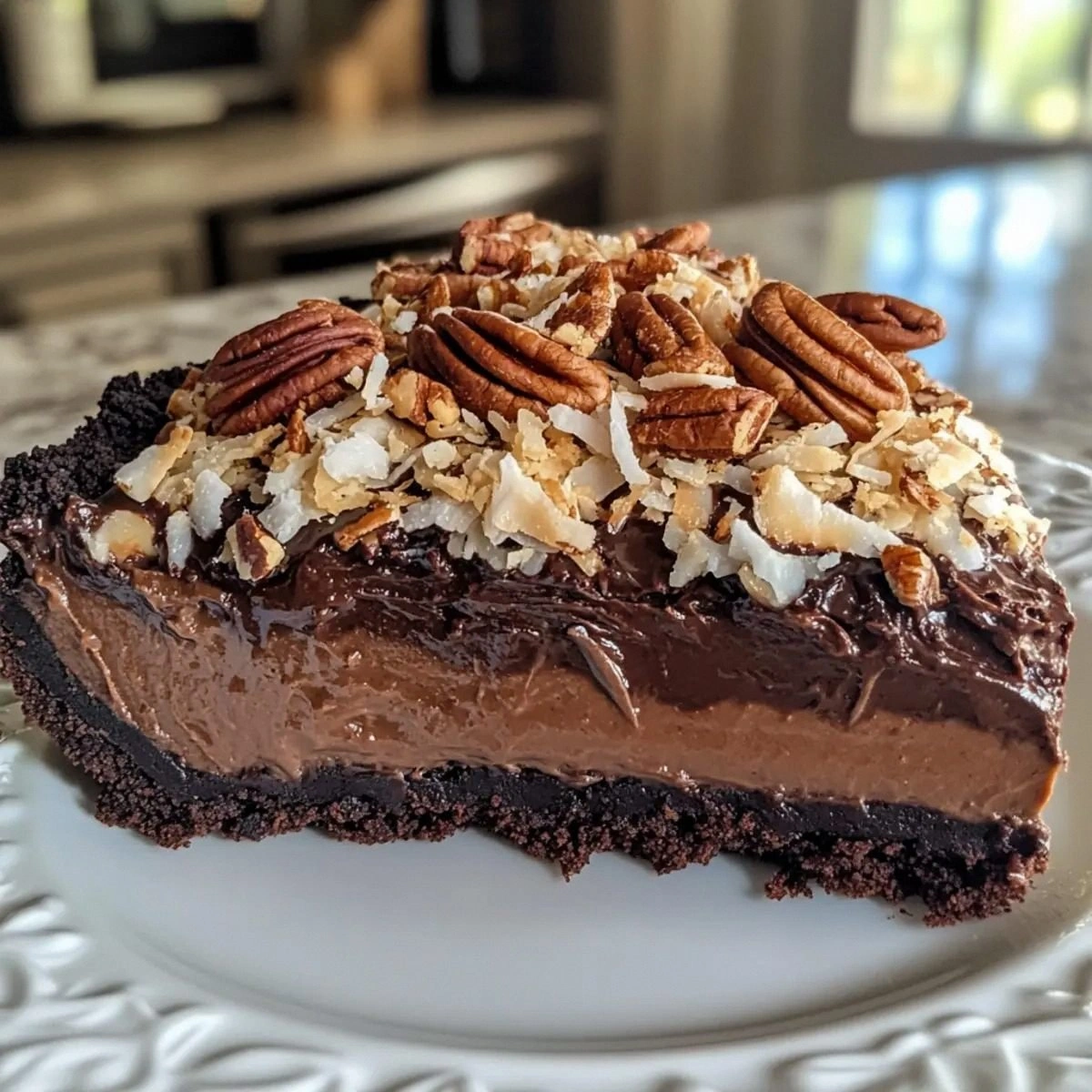
The moment the crust hits the countertop, you hear that satisfying crunch—like stepping on fresh snow with a crisp, buttery footfall. The scent of melted chocolate mingles with toasted coconut and pecans, creating an aroma that makes the whole kitchen feel like a tropical bakery. As the filling sets, there’s a gentle, glossy sheen that catches the light, promising a silky texture that will coat your tongue like velvet. When you finally slice into it, the layers part with a soft sigh, revealing a glossy, caramel‑brown center dotted with toasted coconut shreds that sparkle like tiny islands in a chocolate sea.
What makes this version stand out from every other “no‑bake chocolate pie” you’ve seen online? First, the base: crushed Oreos give a deep, chocolatey crunch that’s richer than a traditional graham cracker crust. Second, the filling: I’ve swapped the usual condensed milk for a blend of heavy cream, half‑and‑half, and light brown sugar, creating a custard‑like body that’s both airy and indulgent. Third, the topping: toasted coconut and pecans are folded in, adding texture that’s both chewy and crunchy, and a nutty caramel note that makes the whole thing sing. Most recipes get the balance wrong, ending up either too sweet or too soggy. This one? It’s perfectly balanced, and it stays firm without refrigeration for up to two hours—ideal for those spontaneous summer gatherings.
I’m going to let you in on a little secret that most bakers overlook: a splash of half‑and‑half in the custard base prevents it from curdling when you add the hot chocolate, giving you a silk‑smooth finish every single time. I dare you to taste this and not go back for seconds. Okay, ready for the game‑changer? Let me walk you through every single step — by the end, you’ll wonder how you ever made it any other way.
What Makes This Version Stand Out
- Flavor Explosion: The combination of dark semi‑sweet chocolate with caramel‑sweet brown sugar creates a deep, layered taste that feels like a chocolate truffle meets a caramel drizzle.
- Texture Symphony: Crunchy Oreo crust, silky custard, and toasted coconut‑pecan topping give you three distinct textures that play off each other perfectly.
- Simplicity: No oven, no mixer, just a few bowls and a whisk. Even if you’ve never made a custard, this recipe is foolproof.
- Unique Twist: Using Oreo cookies for the crust adds a coffee‑like bitterness that cuts through the sweetness, something you rarely find in traditional German chocolate pies.
- Crowd Reaction: I’ve served this at backyard barbecues and it’s the first dessert to disappear—people keep asking for the recipe before the first bite.
- Ingredient Quality: Semi‑sweet chocolate with at least 55% cacao gives a robust flavor without being overly bitter.
- No‑Bake Method: The whole thing sets in the fridge, which means you can prep it ahead of time and focus on the party.
- Make‑Ahead Potential: Keeps well refrigerated for up to three days; the flavors actually deepen after a night.
Inside the Ingredient List
The Flavor Base
The semi‑sweet chocolate is the heart of this pie. Its 55% cacao content provides a rich, slightly bitter backbone that balances the sweet brown sugar. If you skip the chocolate, you’ll end up with a bland custard that feels like a sugar‑water pudding. A good swap is dark chocolate chips, but make sure they’re at least 60% cacao; otherwise, the flavor will be too sweet. When buying, look for chocolate that lists cocoa butter as a primary ingredient—this ensures a glossy finish.
The Texture Crew
The Oreo crust brings a crunchy, buttery foundation that holds up against the creamy filling. If you’re allergic to gluten, you can substitute gluten‑free chocolate cookies, but the texture will be slightly less crumbly. The shredded coconut and pecans add a toasted, nutty crunch that contrasts beautifully with the smooth custard. Toasting the coconut and nuts for just 5 minutes in a dry skillet brings out a caramelized aroma that makes the pie unforgettable.
The Unexpected Star
Half‑and‑half might seem like a random addition, but it’s the secret that prevents the custard from curdling when the hot chocolate is poured in. It adds a subtle creaminess that you can’t achieve with milk alone. If you’re lactose‑intolerant, try a blend of oat milk and a splash of coconut cream; the flavor will be slightly different but still luscious.
The Final Flourish
The two large egg yolks act as an emulsifier, binding the fat from the butter and chocolate into a smooth, glossy custard. Skipping the yolks will result in a watery filling that never sets. For a richer texture, you can add an extra yolk, but be careful not to over‑whisk, or you’ll end up with a scrambled‑egg‑like curd.
Everything's prepped? Good. Let's get into the real action...
The Method — Step by Step
First, crush the 24 Oreo cookies into fine crumbs. I like to use the zip‑top bag method: place the cookies inside, seal, and roll a heavy skillet over them until you hear a satisfying rustle. The crumbs should be fine but still have tiny bits for texture. Tip: If you hear a faint pop, that means the butter inside the Oreos is releasing—perfect!
Melt the 6 tablespoons of unsalted butter in a saucepan over low heat. Once melted, stir in the crushed Oreos until the mixture looks like wet sand. Press this mixture firmly into the bottom and up the sides of a 9‑inch springform pan, creating an even crust. Watch Out: Don’t over‑press; you want the crust to be sturdy but not compacted into a brick.
In a separate saucepan, combine 8 ounces of semi‑sweet chocolate, 1 cup heavy cream, and 1/2 cup half‑and‑half. Heat gently, stirring constantly, until the chocolate fully melts and the mixture becomes glossy. The temperature should stay around 115°F (46°C); any higher and the chocolate can seize.
In a mixing bowl, whisk together 2 large egg yolks, 1 cup light brown sugar, and 1 cup sweetened shredded coconut until the mixture is pale and slightly thickened. This is where the magic begins—those yolks will bind everything together. Watch Out: If you whisk too vigorously, you’ll incorporate too much air and the custard could become foamy.
Slowly pour the warm chocolate‑cream mixture into the egg‑yolk mixture, whisking constantly. The key is to temper the yolks: add the hot liquid in a thin stream while whisking, so the yolks don’t scramble. The mixture should become thick, glossy, and start to pull away from the sides of the bowl.
Fold in 1/2 cup toasted pecans (roughly chopped) and an extra handful of toasted coconut for extra crunch. The aroma at this point is intoxicating—think tropical campfire meets chocolate factory. Let the filling cool for about 5 minutes, then pour it over the chilled crust, spreading it evenly with a spatula.
Refrigerate the assembled pie for at least 30 minutes, preferably an hour, until the filling is firm to the touch. This is the moment of truth—if the filling jiggles like Jell‑O, you’ve over‑whisked or the temperature was too high.
Just before serving, sprinkle a final dusting of toasted coconut and a few extra pecan pieces on top for visual appeal. The glossy surface should catch the light, and the topping adds that final crunch. Slice with a warm knife (dip it in hot water, wipe dry) to get clean cuts without dragging the custard.
That's it — you did it. But hold on, I've got a few more tricks that'll take this to another level...
Insider Tricks for Flawless Results
The Temperature Rule Nobody Follows
Never let the chocolate‑cream mixture exceed 120°F (49°C). Anything hotter will cause the cocoa butter to separate, resulting in a grainy texture. I keep a candy thermometer on hand and pull the pan off the heat the moment the mixture glistens. If you don’t have a thermometer, watch for the point where the chocolate stops bubbling and becomes a smooth, mirror‑like surface.
Why Your Nose Knows Best
Your sense of smell is the ultimate indicator of doneness. When the custard mixture starts to emit a faint caramel scent, that’s your cue that the sugar has dissolved fully and the mixture is ready for the yolks. If you smell raw egg, you’ve either under‑cooked or added the yolks too early. Trust that nose; it’s more reliable than a timer.
The 5‑Minute Rest That Changes Everything
After mixing the custard, let it sit for exactly five minutes before pouring it onto the crust. This short rest allows the chocolate crystals to settle, giving you a smoother final texture. Skipping this step is the reason many “no‑bake” pies turn out grainy.
Toast Like a Pro
When toasting coconut and pecans, keep the heat medium‑low and stir constantly. A burnt note will ruin the delicate balance of flavors. The perfect toast is golden‑brown with a faint nutty perfume—think freshly baked bread, not charcoal.
The Slice‑And‑Serve Secret
Warm the knife under hot water for 10 seconds, then dry it thoroughly before each cut. This technique prevents the custard from sticking to the blade, giving you clean, picture‑perfect slices every time. I’ve seen too many beautiful pies ruined by a dull, cold knife.
Creative Twists and Variations
This recipe is a playground. Here are some of my favorite ways to switch things up:
Tropical Breeze
Swap the semi‑sweet chocolate for white chocolate and add a tablespoon of pineapple juice to the custard. The result is a bright, tangy pie that screams beach party.
Nut‑Free Delight
Replace pecans with toasted sunflower seeds and ensure the Oreo cookies are nut‑free. The flavor stays rich, and the crunch remains satisfying.
Spiced Autumn
Add a pinch of cinnamon and a dash of nutmeg to the custard, and sprinkle a thin layer of pumpkin spice on top. This variation works beautifully in September and October, giving the pie a warm, cozy vibe.
Coffee Kick
Stir in 1 tablespoon of instant espresso powder into the chocolate‑cream mixture. The coffee notes deepen the chocolate flavor and add a subtle bitterness that balances the sweetness.
Vegan Version
Replace butter with coconut oil, use coconut cream instead of heavy cream, and swap the egg yolks for 2 tablespoons of silken tofu blended until smooth. The texture remains creamy, and the coconut flavor becomes more pronounced.
Storing and Bringing It Back to Life
Fridge Storage
Cover the pie loosely with plastic wrap and store it in the refrigerator for up to three days. The custard stays firm, and the flavors meld together, becoming even more harmonious. If you notice condensation, pat the surface with a paper towel before serving.
Freezer Friendly
Wrap the entire pie (still in the springform pan) in a double layer of foil, then place it in a freezer‑safe bag. It will keep for up to two months. When you’re ready to enjoy, move it to the fridge to thaw overnight.
Best Reheating Method
Before serving a chilled slice, let it sit at room temperature for 15 minutes. If the custard feels too firm, add a tiny splash (about a teaspoon) of warm water to the surface and let it sit for a minute—the steam will bring back that luscious melt‑in‑your‑mouth feel.