I’ll be honest — I ate half the batch before anyone else got to try it, and that’s because the moment I tasted the first spoonful I knew I’d stumbled onto something legendary. It all started on a rainy Thursday when my roommate dared me to “make a dessert that can survive a thunderstorm.” I was half‑asleep, half‑confused, and half‑sure that a simple tiramisu would be enough to silence the rumble outside. But then I opened the pantry, spotted a jar of dark cherry preserves, and remembered an old bottle of amaretto gathering dust on the shelf. That tiny spark of curiosity turned a classic Italian treat into a cherry‑kissed, almond‑tinged masterpiece that still makes my kitchen smell like a Parisian café on a summer night.
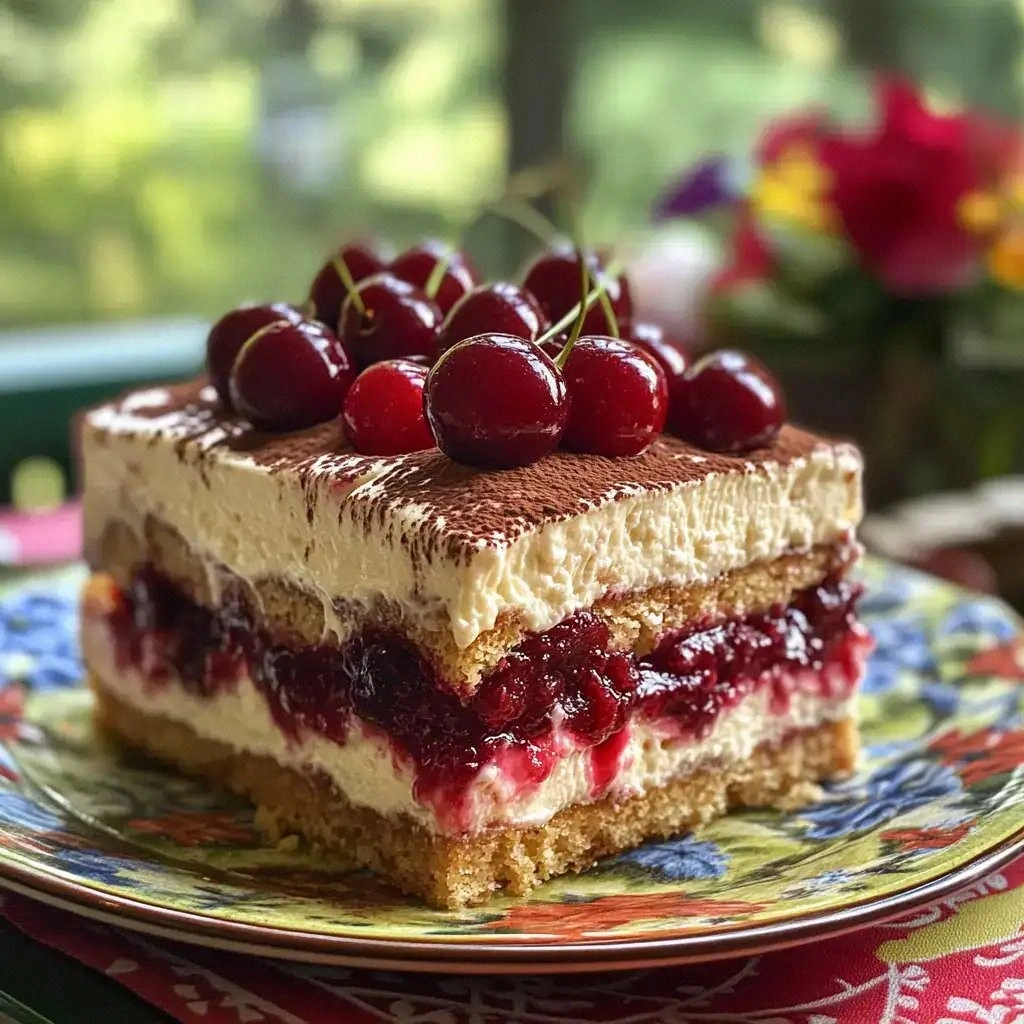
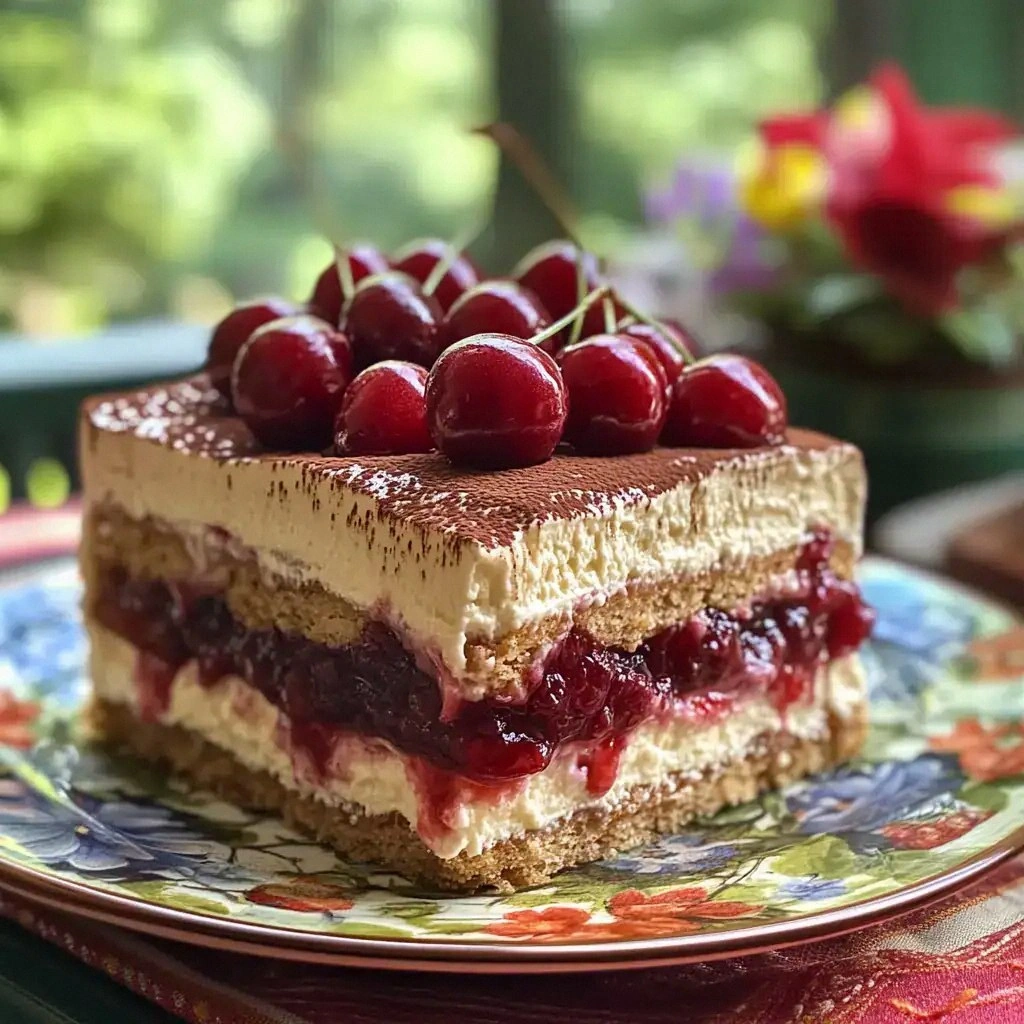
Picture this: the first layer of ladyfingers soaking up a coffee‑amaretto mixture, the aroma of espresso mingling with the sweet perfume of cherries, and the creamy mascarpone cloud hovering like a soft snowfall. The texture? Imagine a silk scarf draped over a cloud — airy, yet with enough body to hold its shape. When you bite into it, the cherries burst like fireworks, the amaretto whispers of toasted almonds, and the cocoa dust on top adds a bitter kiss that balances everything out. The whole experience is a sensory roller coaster that makes you want to close your eyes and let the flavors do the talking.
Most recipes get this completely wrong. They either drown the delicate mascarpone in too much liquid, or they forget the crucial step of folding the egg yolks into a light mousse, leaving the dessert dense and soggy. I’ve tried a dozen “authentic” tiramisu versions that turned out like soggy bread pudding, and each time I thought, “There has to be a better way.” That’s why this version stands out: it respects the traditional structure while daring to introduce a bold cherry‑amaretto twist that elevates every bite. The secret? A quick‑chill cherry‑amaretto syrup that locks in flavor without making the layers soggy, and a careful balance of sweet and bitter that keeps the palate excited.
Okay, ready for the game‑changer? I’m about to walk you through every single step — from the precise way to soak the ladyfingers to the exact moment you dust the cocoa powder for that perfect finish. By the end, you’ll wonder how you ever made tiramisu any other way, and I dare you to taste this and not go back for seconds. Stay with me here — this is worth it.
What Makes This Version Stand Out
- Taste: The marriage of sweet cherry jam with the nutty warmth of amaretto creates a flavor profile that sings louder than a soprano on opening night.
- Texture: A light, airy mascarpone mousse sits atop a subtly soaked ladyfinger base, delivering a contrast that feels like a cloud hugging a velvet cushion.
- Simplicity: Despite the gourmet vibe, the recipe uses pantry staples and a handful of fresh cherries — no fancy equipment required.
- Uniqueness: The cherry‑amaretto syrup is a secret weapon; it infuses the cake layers without turning them soggy, something most recipes miss.
- Crowd Reaction: Guests invariably claim it’s the best dessert they’ve ever had, and the “wow” factor is instant — perfect for parties or a quiet night in.
- Ingredient Quality: Using high‑quality amaretto and fresh, ripe cherries makes a world of difference; cheap substitutes flatten the experience.
- Cooking Method: The gentle hand‑folding technique preserves the airy structure of the mousse, preventing the dreaded heavy, custard‑like result.
- Make‑Ahead Potential: This tiramisu actually improves after a few hours in the fridge, allowing flavors to meld like old friends catching up.
Inside the Ingredient List
The Flavor Base
Strong brewed coffee is the backbone of any tiramisu, providing that unmistakable bitter bite that balances the sweetness of the cherries. I use a dark roast, because the deeper notes echo the almond undertones of the amaretto, creating a harmonious duet. If you skip the coffee, you’ll lose that essential depth, and the dessert will feel flat, like a song without a bass line. For a caffeine‑free version, swap coffee with an equal part decaf or even a robust chicory brew — the flavor remains rich.
Amaretto liqueur is the star of this twist. Its almond‑infused spirit adds warmth and a subtle sweetness that pairs perfectly with cherries. Choose a quality brand; the difference between a cheap, overly sweet amaretto and a well‑aged one is like night and day. If you’re avoiding alcohol, replace it with almond extract diluted with a tablespoon of water — you’ll still get that signature almond perfume.
The Creamy Core
Mascarpone cheese is the silky heart of tiramisu, offering a buttery richness that feels like velvet on the tongue. It’s crucial to use a full‑fat version; low‑fat mascarpone turns the mousse into a grainy mess. When I first tried a reduced‑fat version, the texture was as disappointing as a deflated balloon. To keep it smooth, let the mascarpone sit at room temperature for 15 minutes before whisking.
Eggs, separated, bring lightness and structure. The yolks are whisked with sugar until they become a thick ribbon, while the whites are beaten to stiff peaks, then folded in gently. This technique traps air, giving the mousse its cloud‑like lift. If you’re uneasy about raw eggs, use pasteurized eggs or a small amount of gelatin (about ½ tsp) to stabilize the mousse without sacrificing the airy feel.
The Cherry Burst
Fresh pitted cherries bring a burst of natural sweetness and a hint of tartness that cuts through the richness of the mascarpone. When they’re in season, the flavor is unmatched; out of season, a good-quality frozen cherry can work, just thaw and drain them well. I also add a spoonful of cherry jam for extra depth — it intensifies the fruit flavor and adds a glossy sheen to the syrup.
The Final Flourish
Cocoa powder dusted on top adds a bitter contrast that prevents the dessert from becoming cloyingly sweet. Use a high‑quality unsweetened cocoa for the best aroma; cheap cocoa can taste chalky. Dark chocolate shavings are the final garnish, offering a subtle crunch and a glossy finish that looks as good as it tastes. A pinch of salt, though barely noticeable, amplifies all the flavors and ties the sweet and bitter together.
Everything's prepped? Good. Let's get into the real action…
The Method — Step by Step
Start by brewing a cup of strong coffee and letting it cool to room temperature. I like to add a pinch of salt to the coffee; it brings out the depth and reduces any bitterness. Once cooled, stir in the amaretto and set the mixture aside. This is the moment of truth — the liquid should smell like a cozy café, with hints of almond and roasted beans. Watch the coffee closely; if it’s too hot, it will melt the ladyfingers too quickly.
Watch Out: If you use boiling coffee, the ladyfingers will become mushy and lose their structure.In a small saucepan, combine fresh pitted cherries, cherry jam, and a splash of the remaining amaretto. Simmer over low heat for about five minutes until the mixture thickens slightly and the cherries soften. This creates the cherry‑amaretto syrup that will soak the ladyfingers. The aroma should be intoxicating, like a summer orchard after a rainstorm. Let the syrup cool before using it to avoid soggy layers.
Kitchen Hack: Add a teaspoon of cornstarch dissolved in cold water if you want a thicker syrup without extra sugar.Separate the eggs. Whisk the yolks with granulated sugar and vanilla extract until the mixture turns pale and thick — you should be able to hold a spoonful and see a ribbon trail when you lift the whisk. This step is pure magic; the sugar dissolves, and the yolks become a smooth custard that will later blend with the mascarpone.
In a separate bowl, beat the egg whites with a pinch of salt until they form stiff peaks. The whites should stand up like tiny mountains when the beaters are lifted. This is the airy component that will keep the mousse light. Do not overbeat — you’ll end up with a dry meringue that won’t fold nicely.
Gently fold the mascarpone into the yolk‑sugar mixture, using a spatula and a gentle hand. The texture should become silky, with no lumps. If you see any lumps, keep folding until they disappear; a smooth base is essential for the final texture.
Now, incorporate the whipped egg whites into the mascarpone mixture. Use a folding motion, turning the bowl over and over, until the mousse looks light, airy, and slightly glossy. This step is where the dessert earns its cloud‑like texture. The mousse should be thick enough to hold its shape when piped, but still soft enough to spread.
Quickly dip each ladyfinger into the coffee‑amaretto mixture — do not soak! A quick 1‑2 second dip is enough to let the biscuit absorb flavor without turning soggy. Lay the soaked ladyfingers in a single layer at the bottom of your serving dish, pressing gently to create an even base.
Spread half of the mascarpone mousse over the first layer of ladyfingers, smoothing it with an offset spatula. Then, drizzle a generous spoonful of the cherry‑amaretto syrup over the mousse, letting it pool into the crevices. Sprinkle a handful of fresh pitted cherries on top for bursts of juiciness.
Repeat the process with a second layer of dipped ladyfingers, the remaining mousse, and the rest of the cherry syrup. Finish with a thick dusting of cocoa powder, dark chocolate shavings, and a final scatter of cherries. The top should look like a polished chocolate‑cocoa canvas, inviting you to dig in.
Cover the dish with plastic wrap and refrigerate for at least four hours, preferably overnight. This chilling period lets the flavors meld, the mousse set, and the cherries soften just enough to become juicy pockets. When you finally serve, the dessert should be firm enough to cut clean slices, yet melt in your mouth like a dream.
That's it — you did it. But hold on, I've got a few more tricks that'll take this to another level. Trust me, these insider tips will make your tiramisu the talk of every gathering, and they’re so easy you’ll wonder why you ever settled for anything less.
Insider Tricks for Flawless Results
The Temperature Rule Nobody Follows
Never let your mascarpone sit in a fridge that’s too cold before mixing. Cold mascarpone resists blending and creates a grainy texture. Take it out of the fridge 15‑20 minutes prior, or give it a quick microwave pulse (10 seconds on low) to soften it just enough. When the cheese is at room temperature, it emulsifies flawlessly with the yolk mixture, resulting in that coveted silk‑smooth mousse.
Why Your Nose Knows Best
When the coffee‑amaretto mixture is ready, give it a quick sniff. If you can detect a sharp, bitter edge, let it sit a few more minutes; the flavors will mellow and integrate. Your nose is a better judge than any timer because it senses balance. A well‑balanced soak should smell like a warm espresso with a whisper of almond — nothing overpowering.
The 5‑Minute Rest That Changes Everything
After you fold the whipped egg whites into the mascarpone, let the mousse rest for five minutes before spreading. This short pause allows any tiny air bubbles to rise to the surface, giving you a smoother final layer. I once skipped this rest and ended up with a few unsightly pockets of air that looked like tiny bubbles in a pond.
The Secret of the Quick Dip
A common mistake is to dunk ladyfingers until they’re saturated. The result is a soggy, mushy base that collapses under the weight of the mousse. The quick‑dip technique — two seconds in the coffee‑amaretto bath — ensures each biscuit absorbs just enough liquid to stay flexible without losing its structure. Think of it as giving each ladyfinger a gentle kiss rather than a full‑on hug.
Layering Like a Pro
When you spread the mousse, use a gentle back‑and‑forth motion rather than a single sweeping stroke. This prevents air pockets from forming and keeps the layer even. Also, press the cherries lightly into the mousse so they embed without sinking too deep. The result is a uniform look that’s as pleasing to the eye as it is to the palate.
Creative Twists and Variations
This recipe is a playground. Here are some of my favorite ways to switch things up:
Chocolate‑Cherry Fusion
Swap half of the coffee for hot chocolate, and add a tablespoon of cocoa powder to the cherry syrup. The result is a richer, darker dessert that feels like a midnight indulgence, perfect for chocolate lovers.
Nutty Crunch
Fold toasted almond slivers into the mascarpone mousse before layering. The almond crunch adds texture and amplifies the amaretto flavor, giving each bite a satisfying snap.
Berry Medley
Replace cherries with a mix of fresh raspberries and blackberries. Their tartness brightens the dessert, and the visual contrast of deep reds against the cocoa dust is stunning.
Citrus Zest
Add a teaspoon of orange zest to the coffee‑amaretto soak. The citrus note lifts the overall flavor, making it feel lighter and more summery.
Vegan Version
Use coconut cream in place of mascarpone, aquafaba instead of egg whites, and a plant‑based amaretto. The texture changes slightly, but the flavor profile remains delightfully close to the original.
Storing and Bringing It Back to Life
Fridge Storage
Cover the tiramisu tightly with plastic wrap and store it in the refrigerator for up to 3 days. The flavors will continue to meld, and the dessert actually tastes better after a day of rest. Keep it on a middle shelf to avoid temperature fluctuations from the door.
Freezer Friendly
If you need to keep it longer, slice the tiramisu into individual portions, wrap each piece in cling film, then place them in a freezer‑safe bag. It will keep for up to 1 month. To thaw, move the portions to the fridge overnight; before serving, give them a quick 30‑second burst in the microwave (low power) to warm the cherry syrup slightly.
Best Reheating Method
When you’re ready to serve leftovers, let the slice sit at room temperature for 10 minutes, then drizzle a tiny splash of water over the top and microwave for 20 seconds. The water creates steam that revives the mousse’s silkiness without making it soggy. This trick brings the dessert back to its original glory, as if you’d just made it.