What Makes This Version Stand Out
- Taste: The flavor profile is a delicate balance between sweet, tangy, and umami, creating a sushi that feels both fresh and indulgent.
- Texture: The rice remains fluffy yet slightly sticky, allowing the fillings to glide smoothly without breaking.
- Simplicity: The recipe requires only a handful of pantry staples, making it accessible to any home cook.
- Uniqueness: The inclusion of pressed tofu and a spicy mayo glaze sets this roll apart from classic vegetarian sushi.
- Crowd Reaction: Guests rave about the creamy heat and crunchy vegetables, making it a hit at parties.
- Ingredient Quality: Using high-quality nori sheets and fresh produce elevates the overall taste.
- Make‑Ahead Potential: These rolls can be assembled ahead of time and chilled, preserving flavor for hours.
Inside the Ingredient List
The Flavor Base
The heart of any sushi roll is the rice, and in this recipe we use 2 cups of premium sushi rice cooked with 2½ cups of water and seasoned with a blend of ¼ cup rice vinegar, 2 tablespoons of sugar, and 1 teaspoon of salt. This combination creates a subtle sweetness that is balanced by the sharp acidity of the vinegar, giving the rice a bright, clean flavor that lets the vegetables shine. The key is to let the rice rest at room temperature for exactly ten minutes after cooking; this pause allows the grains to settle and absorb the seasoning evenly, preventing that dreaded mushy bite. If you skip this rest period, the rice will feel heavy and clumpy, masking the freshness of the fillings. The result is a rice that feels airy yet cohesive, a perfect canvas for the rest of the ingredients.
The Texture Crew
Cucumber, carrot, and avocado are the primary fillings, each bringing a distinct mouthfeel that complements the rice. Julienne cucumber adds a crisp snap that cuts through the softness of the rice, while carrot offers a subtle sweetness and a pleasing crunch. Avocado, on the other hand, provides a buttery, silky texture that balances the sharpness of the cucumber. Pressed tofu, sliced into cubes, adds a protein punch while remaining light and airy, preventing the roll from feeling dense. Together, these ingredients create a harmonious blend of textures that keep each bite interesting and satisfying. If you replace tofu with a firmer vegetable, the roll may feel heavier and less balanced.
The Unexpected Star
Spicy mayo is the secret weapon that elevates this vegetarian sushi to a new level of flavor. Made by whisking together 1 tablespoon of mayonnaise, 1 tablespoon of sriracha, and a splash of sesame oil, the sauce delivers a creamy heat that contrasts beautifully with the mildness of the vegetables. The sesame oil adds a nutty aroma that lingers on the palate, while the sriracha injects a subtle kick that keeps the dish from feeling too tame. This sauce is also a great way to add moisture to the roll, preventing it from drying out during storage. If you prefer a milder sauce, simply reduce the amount of sriracha or replace it with a milder chili paste.
The Final Flourish
Nori sheets, sesame seeds, and pickled ginger are the finishing touches that add depth and visual appeal to the sushi rolls. Eight sheets of nori provide a slightly smoky flavor and a sturdy structure that holds the fillings together. Toasted sesame seeds sprinkle a subtle crunch and nutty flavor on top of each roll, while chopped pickled ginger adds a bright, citrusy zing that cleanses the palate between bites. A drizzle of soy sauce before serving enhances the umami profile, tying all the elements together. If you’re short on time, you can skip the ginger, but the absence of that bright note will make the rolls feel slightly flat. The final flourish ensures that every roll looks as good as it tastes.
Everything's prepped? Good. Let's get into the real action...
The Method — Step by Step
- Step 1: Rinse the sushi rice under cold water until the water runs clear. This removes excess starch and prevents the grains from becoming gummy. Place the rinsed rice in a saucepan with 2½ cups of water and bring to a boil. Reduce the heat to low, cover, and let it simmer for 18 minutes, then remove from heat and let it steam, still covered, for another 10 minutes. The rice should be fluffy, with each grain distinct.
- Step 2: While the rice is steaming, combine ¼ cup rice vinegar, 2 tablespoons sugar, and 1 teaspoon salt in a small bowl. Stir until the sugar dissolves completely. Gently fold this vinegar mixture into the cooked rice using a wooden spatula, lifting and folding rather than stirring vigorously to keep the grains intact. This step infuses the rice with a subtle tang that is essential for the sushi’s flavor profile. Let the seasoned rice cool to room temperature before using.
- Step 3: Slice the cucumber, carrot, and avocado into thin julienne strips. If you prefer a softer texture, blanch the carrot strips in boiling water for 30 seconds before slicing. Pat the avocado slices dry with a paper towel to remove excess moisture, which prevents the rice from becoming soggy. Arrange the vegetables in a single layer on a clean cutting board. This organized layout ensures even distribution of fillings in each roll.
- Step 4: Press tofu cubes into a clean cloth to remove excess moisture, then lightly season with a pinch of salt and a drizzle of sesame oil. Heat a non-stick skillet over medium heat and sear the tofu for 2 minutes on each side until golden brown. The sear adds a subtle caramelized flavor that complements the mildness of the vegetables. Let the tofu rest on a paper towel to absorb any remaining oil before slicing into cubes. This step adds protein without overpowering the delicate balance of flavors.
- Step 5: Prepare the spicy mayo by whisking together 1 tablespoon mayonnaise, 1 tablespoon sriracha, and a splash of sesame oil until smooth. If you prefer a milder sauce, reduce the sriracha or use a sweet chili sauce instead. Set the sauce aside; it will be drizzled over the finished rolls for a creamy heat that ties all elements together. The mayo also helps keep the fillings moist during storage.
- Step 6: Lay a sheet of nori shiny side down on a bamboo mat. Spread a thin layer of seasoned rice over the nori, leaving a 1-inch border at the top. Sprinkle 1 tablespoon of toasted sesame seeds over the rice for added crunch and a nutty aroma. Place the sliced vegetables and tofu in a line across the center of the rice. This arrangement ensures a balanced distribution of flavors in every bite.
- Step 7: Begin rolling the bamboo mat from the bottom, gently tightening as you go. Keep the roll firm but not too tight to avoid crushing the fillings. When you reach the top border, moisten the edge with a little water to seal the roll. The moisture ensures the nori adheres without tearing. Slide the completed roll onto a cutting board and let it rest for 2 minutes to set the shape.
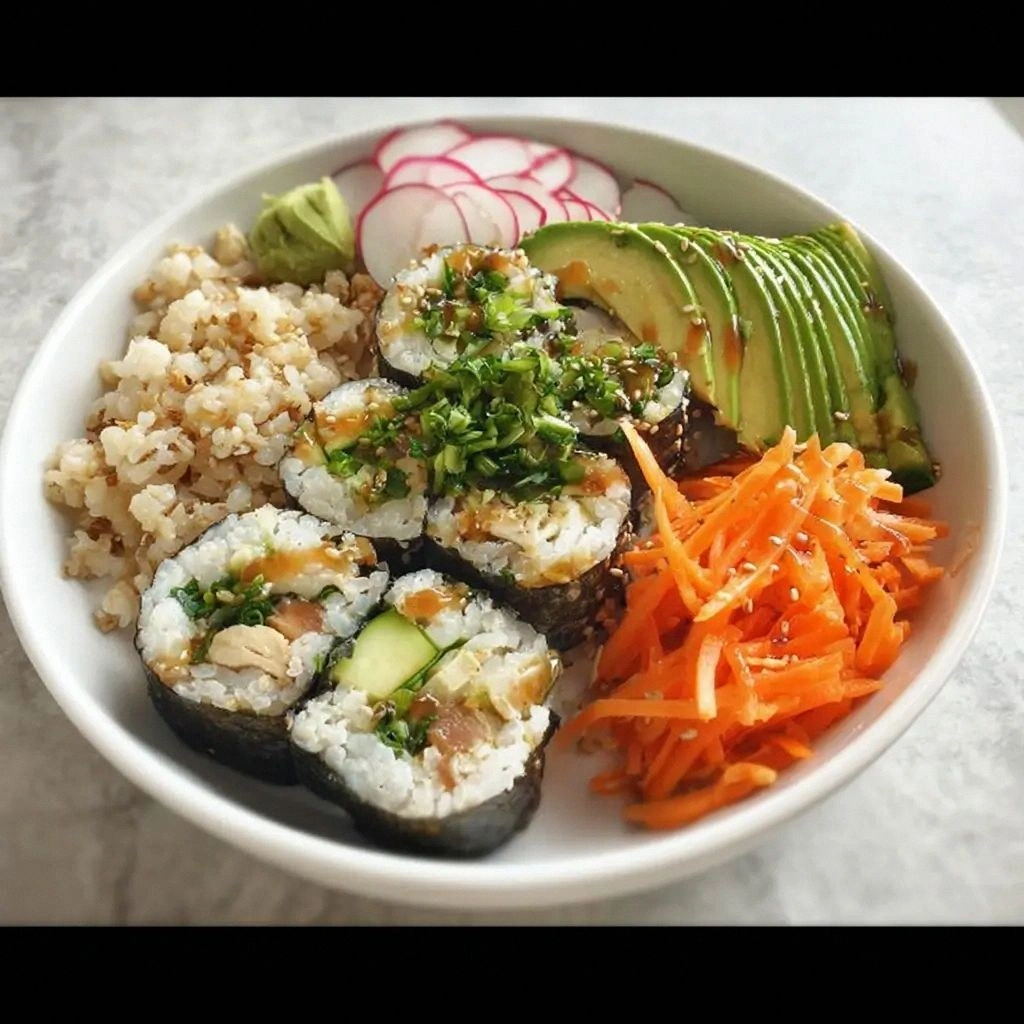
- Step 8: Slice the roll into 8 equal pieces using a sharp, wet knife. Wipe the knife between cuts to keep the slices clean and prevent them from sticking. Each piece should showcase a neat spiral of rice, vegetables, and tofu. This step is crucial; a sloppy cut can ruin the presentation and texture. Remember to keep the knife slightly angled for a cleaner edge.
- Step 9: Drizzle each sushi piece with a thin line of spicy mayo along the edge. This not only adds flavor but also creates a visual pop that makes the roll look more appetizing. Garnish with a sprinkle of sesame seeds and a few pieces of pickled ginger on the side. The ginger’s bright acidity cuts through the richness of the mayo and adds a refreshing finish. This final touch elevates the roll from ordinary to extraordinary.
- Step 10: Serve immediately with soy sauce, wasabi, and extra pickled ginger on the side. The soy sauce adds saltiness and depth, while the wasabi provides a sharp, peppery heat that pairs well with the creamy mayo. Keep the sushi chilled on a plate lined with a paper towel to absorb any excess moisture. This ensures the rice stays firm and the flavors remain vibrant. Enjoy the burst of textures and flavors that dance across your palate.
That's it — you did it. But hold on, I've got a few more tricks that'll take this to another level...
Insider Tricks for Flawless Results
The Temperature Rule Nobody Follows
Many home cooks cook sushi rice at too high a temperature, which leads to unevenly cooked grains that clump together. By bringing the water to a rolling boil and then immediately reducing the heat to low, you allow the rice to cook evenly without steaming too aggressively. Letting it steam off the heat for an additional 10 minutes while still covered locks in moisture and creates the perfect fluffy texture. I once tried skipping the resting period, and the result was soggy, clumpy rice that made the rolls fall apart. Stick to the rest period and watch the difference.
Why Your Nose Knows Best
Before you start rolling, give the rice a quick sniff. If it smells slightly sweet and tangy, you’ve seasoned it correctly. A faint vinegar scent indicates the seasoning is too weak; add a splash of vinegar to adjust. Your nose can detect subtle imbalances that a taste test might miss. This quick check saves you from over-seasoning or under-seasoning the entire batch.
The 5‑Minute Rest That Changes Everything
After spreading rice on the nori, let the roll rest for 5 minutes before cutting. This brief pause allows the rice to settle, making the slices cleaner and preventing the fillings from spilling out. If you rush the cutting, the roll can become a mushy mess. I’ve seen even seasoned chefs skip this step during busy service; the result is a less than perfect roll. Give it a minute and feel the difference.
Use a Wet Knife for Clean Cuts
Water reduces friction between the knife and the sushi, ensuring a smooth slice. Dip the blade in hot water, wipe it dry, and slice. This technique is especially helpful when cutting rolls with sticky rice. A dry knife can pull at the rice, leaving ragged edges that ruin the presentation. A wet knife keeps the edges clean and the roll looking professional.
Keep the Bamboo Mat Clean
Any leftover rice or filling on the mat can cause the next roll to stick or break. Rinse the mat with warm water and pat dry after each roll. A clean mat ensures each roll rolls smoothly and maintains its shape. I’ve seen rolls that crumble because the mat was sticky from the previous batch; cleaning it keeps the process seamless.
Serve Immediately or Chill Properly
If you need to serve sushi later, place the rolls on a plate lined with a paper towel and cover them loosely with foil. This prevents the rice from drying out while keeping it cool. Avoid placing the sushi in a sealed container, as trapped moisture can turn the rice soggy. By storing it properly, you preserve the delicate textures and flavors.
Creative Twists and Variations
This recipe is a playground. Here are some of my favorite ways to switch things up:
Smoky Temaki
Replace nori sheets with a larger, folded sheet to create a hand roll, and brush the outside with a light coating of smoked paprika-infused soy sauce. The smoky flavor pairs wonderfully with the creamy avocado. Guests love the handheld convenience and the burst of smokiness.
Rainbow Roll
Layer thin slices of red bell pepper, yellow squash, and purple cabbage between the rice and fillings. The colorful arrangement not only looks stunning but also adds a variety of textures and subtle sweet notes. This variation is perfect for themed parties.
Crunchy Crunch
Add a handful of crushed rice crackers or panko breadcrumbs to the filling mix. The crunch introduces a new dimension and keeps the roll interesting. The crackers also absorb excess moisture, keeping the rice from becoming soggy.
Sweet and Spicy
Swap the spicy mayo for a drizzle of honey and a pinch of cayenne pepper. The honey’s sweetness balances the heat, creating a dynamic flavor profile that’s both comforting and adventurous. This twist is great for those who love a bit of heat without overpowering.
Herb‑Infused Nori
Before rolling, sprinkle finely chopped fresh mint or cilantro onto the rice. The herbs add a refreshing lift that cuts through the richness of the avocado and mayo. The aroma is invigorating and pairs well with the sesame seeds.
Seaweed‑Wrapped Veggie
Use a sheet of nori as a wrapper around a small bundle of blanched spinach and carrot sticks. Roll it into a mini sushi stick and serve with a side of miso soup. The seaweed adds umami, while the spinach provides a subtle earthy flavor.
Storing and Bringing It Back to Life
Fridge Storage
Store the rolls in an airtight container for up to 24 hours. Keep them on a paper towel to absorb excess moisture, which prevents the rice from becoming soggy. When ready to serve, let them sit at room temperature for 10 minutes to regain texture.
Freezer Friendly
Wrap each roll tightly in plastic wrap and place them in a freezer bag. They can be frozen for up to 3 days. Thaw overnight in the fridge before serving. Freezing slightly alters the texture, but the flavors remain intact.
Best Reheating Method
To reheat, lightly steam the rolls for 1–2 minutes or microwave on low power for 20–30 seconds. Add a tiny splash of water before reheating to create steam, which restores moisture and prevents the rice from drying out. Serve immediately with soy sauce and wasabi.