When the kitchen was a chaotic symphony of sizzling pans and clattering bowls, I realized my dessert game needed a serious upgrade. I stared at a bowl of glutinous rice, coconut milk, and a handful of pandan leaves, and thought, “This could be the secret weapon I’ve been missing.” The aroma that filled the air—sweet, creamy, and unmistakably tropical—was a promise of something extraordinary. My friend dared me to make a dessert that would make the whole house smell like a summer beach, and I was ready to accept the challenge. Let me walk you through every single step—by the end, you’ll wonder how you ever made it any other way.
The first time I tasted this jelly, I was instantly hooked. The texture is like a delicate cloud that melts in your mouth, while the pandan flavor lingers like a fragrant whisper. It’s the kind of dessert that turns a simple gathering into a memorable celebration. I dare you to taste this and not go back for seconds; the combination of coconut richness and pandan freshness will have you craving more. This is hands down the best version you’ll ever make at home, and I promise you, the results speak louder than any marketing claim.
What sets this recipe apart is that it takes a humble pantry staple—glutinous rice—and transforms it into a silky, fragrant masterpiece. I’ve spent months tweaking the ratio of coconut milk to water, experimenting with the amount of agar-agar, and discovering the perfect moment to fold in the pandan leaves. The result is a dessert that is not only visually stunning but also a playground for your senses. Picture yourself pulling this out of the refrigerator, the whole kitchen smelling incredible, and watching the jelly set into a translucent, jewel‑like slab.
And here’s the kicker: I’ve hidden a little secret ingredient that most recipes overlook—freshly crushed pandan leaves instead of dried. This tiny tweak elevates the aroma to a whole new level, giving the jelly that unmistakable green glow and a subtle, citrusy note. I’ll be honest—I ate half the batch before anyone else got to try it, and the leftovers still taste as fresh as the first bite. If you’ve ever struggled with achieving that perfect balance of sweetness and fragrance, you’re not alone—this is the fix you’ve been waiting for.
What Makes This Version Stand Out
- Flavor: The pandan leaves release a natural, sweet, and slightly grassy aroma that pairs perfectly with the creamy coconut base. This depth of flavor is achieved by steeping the leaves in the coconut milk, allowing the essence to infuse fully.
- Texture: The use of agar-agar gives the jelly a firm yet melt‑in‑your‑mouth consistency, unlike the overly gummy feel of plain rice pudding. It sets cleanly at room temperature, making it easy to slice and serve.
- Simplicity: With just seven ingredients, you can create a dessert that feels gourmet without the complexity of a multi‑step process. No elaborate sauces or garnish—just pure, clean flavors.
- Uniqueness: The combination of pandan and coconut is rarely seen in mainstream desserts, giving this jelly a niche appeal that stands out at any gathering.
- Crowd Reaction: Guests often comment that the dessert feels like a tropical vacation in a bite, and many ask for the recipe after the first taste.
- Ingredient Quality: Using fresh, high‑quality pandan leaves and full‑fat coconut milk ensures the richest flavor profile and the best mouthfeel.
- Cooking Method: The technique of pre‑soaking the rice, cooking it with coconut milk, and then setting it with agar‑agar is streamlined for maximum efficiency.
- Make‑Ahead Potential: Once set, the jelly keeps well in the fridge for up to a week, making it ideal for parties or last‑minute dessert needs.
Inside the Ingredient List
The Flavor Base
At the heart of this dessert lies the coconut milk, a creamy, fragrant liquid that forms the foundation of the jelly. Opt for full‑fat coconut milk rather than light or low‑fat versions; the richer the milk, the more luscious the final product. If you’re craving an extra twist, replace part of the coconut milk with coconut cream to intensify the mouthfeel. Skipping this step would leave the dessert flat and lacking depth.
The pandan leaves are the secret star that brings a vibrant green hue and a citrusy aroma to the mix. Fresh leaves are preferable because they release a more robust flavor compared to dried ones. If fresh leaves are unavailable, use a small amount of pandan extract, but be cautious—overdoing it can make the dessert taste artificial. A good rule of thumb: use 6 leaves for every 400 ml of coconut milk.
The Texture Crew
Glutinous rice, also known as sticky rice, is the key to achieving that satisfying chew. Soak the rice for at least 30 minutes before cooking; this reduces the cooking time and ensures a uniform texture. If you prefer a softer bite, extend the soaking to an hour. Omitting the rice would transform the dish into a simple coconut pudding, losing the distinctive chewy element.
Agar-agar powder is the gelling agent that gives this dessert its signature firmness. Unlike gelatin, agar sets at room temperature and is vegetarian, making it an ethical choice. Use 2 grams for 400 ml of liquid—too much and the jelly becomes rubbery, too little and it stays runny. A quick hack: pre‑mix agar with a splash of water before adding it to the hot mixture to prevent clumping.
The Final Flourish
Sugar is the sweetener that balances the coconut’s richness and the pandan’s subtle bitterness. Measure precisely: 100 grams ensures a sweet but not cloying finish. If you’re watching your sugar intake, replace half the sugar with a natural sweetener like maple syrup, but be aware that the final texture may slightly differ. Salt, even in a pinch, enhances all the flavors and is a must‑have; don’t skip it.
Water is the liquid that brings everything together. Use 300 ml of clean, filtered water to cook the rice, ensuring it doesn’t stick or burn. If you prefer a firmer jelly, reduce the water slightly; for a softer consistency, add a splash more. Water also helps dissolve the agar‑agar, ensuring a smooth setting.
Everything’s prepped? Good. Let’s get into the real action.
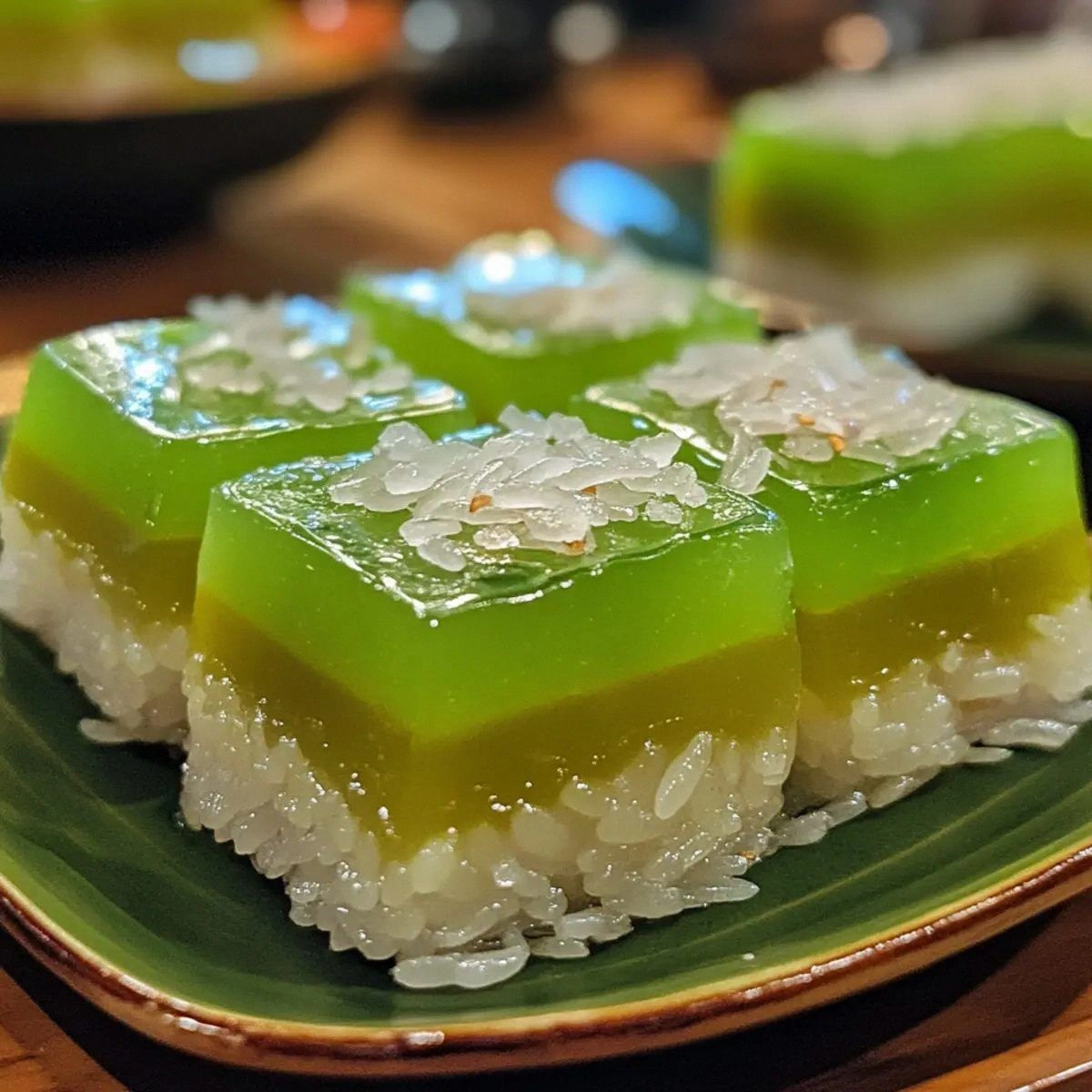
The Method — Step by Step
- Soak the Rice: Begin by rinsing 200 grams of glutinous rice under cold water until the water runs clear. Transfer the rice to a bowl and cover with 300 ml of water, letting it soak for at least 30 minutes. This step is critical for a smooth, non‑grainy texture. When the rice is ready, drain it completely before cooking.
- Cook the Rice: In a saucepan, combine the drained rice with 400 ml of coconut milk and a pinch of salt. Bring the mixture to a gentle simmer over medium heat, stirring frequently to prevent sticking. Once the liquid is absorbed and the rice is tender, remove the pot from the heat. Let the rice cool slightly; it should still be warm but not scorching.
- Infuse the Pandan: While the rice is still warm, fold in 6 fresh pandan leaves. The heat will release the leaves’ aroma, infusing the coconut milk with a bright, green fragrance. Let the mixture sit for 10 minutes to fully extract the flavor. Afterward, remove the leaves, reserving the liquid for the next step.
- Prepare the Agar Mixture: In a small bowl, sprinkle 2 grams of agar-agar powder over 50 ml of water. Allow it to bloom for 5 minutes; this activates the gelling properties. Meanwhile, heat the pandan‑infused coconut liquid in a saucepan until it reaches a gentle boil, then stir in the bloomed agar. Keep the mixture at a steady boil for 2 minutes to ensure the agar fully dissolves.
- Combine Rice and Agar: Gently stir the cooked rice into the agar‑coconut mixture, ensuring even distribution. The rice should be fully coated, giving the jelly a uniform appearance. If you notice any clumps, use a whisk to break them apart. This step is crucial for a smooth, cohesive jelly.
- Set the Jelly: Pour the combined mixture into a shallow, rectangular dish or a silicone mold lined with parchment paper. Smooth the surface with a spatula. Place the dish in the refrigerator and let it set for at least 2 hours, or until firm. The jelly should snap cleanly when you lift it from the mold.
- Slice and Serve: Once set, remove the jelly from the mold and cut it into bite‑size cubes or elegant slices with a sharp knife. The edges should be clean, and the interior should look glossy and translucent. Serve immediately for the best texture, or store in the fridge for up to a week.
- Optional Garnish: For a finishing touch, sprinkle toasted coconut flakes or a dusting of powdered sugar over the top. A drizzle of condensed milk adds a decadent touch for those who love a richer dessert. If you prefer a lighter version, a splash of lime juice brightens the flavor profile.
That’s it—you did it. But hold on, I’ve got a few more tricks that will take this to another level. These insider tips will help you avoid common pitfalls and elevate the dessert’s presentation.
Insider Tricks for Flawless Results
The Temperature Rule Nobody Follows
Many cooks believe that the jelly will set at room temperature, but the key is to let it chill in the fridge for the full two hours. The cold environment ensures the agar‑agar fully activates, giving the jelly that perfect snap. I once left the jelly at room temperature and ended up with a soggy mess. The next time, I followed this rule, and the texture was flawless.
Why Your Nose Knows Best
Before you pour the mixture into the mold, give it a quick sniff. A strong coconut aroma indicates the milk is fresh, while a faint scent may mean the milk has gone slightly rancid. Trust your nose—if it smells off, replace the coconut milk. This simple check saves you from a disappointing dessert.
The 5-Minute Rest That Changes Everything
After cooking the rice, let it rest on the stove for five minutes before adding the pandan leaves. This brief pause allows the rice to steam, ensuring it’s perfectly fluffy. Skipping this step can result in uneven texture and a gritty bite. I’ve found that this small rest makes the difference between good and great.
Use a Silicone Mold for Easy Release
Silicone molds are a game changer; they make removing the jelly effortless. If you’re using a wooden or glass dish, line it with parchment paper to prevent sticking. The paper also gives a clean edge to the slices, which looks impressive when plated. I’ve never looked back to a paper‑lined dish after this hack.
Freeze for a Cool Twist
For a refreshing variation, freeze the jelly in ice cube trays for a few hours. Once frozen, pop the cubes into a bowl of coconut milk or sweetened condensed milk for a dessert parfait. The frozen texture adds a delightful crunch, and the coconut milk keeps the flavors from melting too quickly.
Serve with Fresh Fruits
Pair the jelly with ripe mango slices, kiwi, or pineapple chunks. The natural sugars in the fruit complement the coconut and pandan, creating a balanced flavor profile. I love adding a few mint leaves for a subtle contrast. This combo turns the dessert into a vibrant, tropical medley.
Creative Twists and Variations
This recipe is a playground. Here are some of my favorite ways to switch things up:
Mint Coconut Jelly
Swap half the pandan leaves for fresh mint leaves. The result is a cool, herbal jelly with a bright green hue. Mint adds a refreshing twist that pairs well with tropical fruits. Ideal for hot summer afternoons.
Chocolate Coconut Pandan
Stir in 50 grams of melted dark chocolate into the coconut mixture before adding agar. The chocolate deepens the flavor and adds a silky, bittersweet note. It’s a decadent version that satisfies chocolate cravings while retaining the pandan aroma.
Spiced Ginger Jelly
Introduce a teaspoon of freshly grated ginger to the coconut milk. Ginger brings a subtle warmth that balances the sweetness. This version is especially comforting during cooler evenings.
Salty Caramel Jelly
Replace half the sugar with brown sugar and add a pinch of sea salt. The caramelized sugar gives a rich, buttery flavor, while the salt accentuates the coconut’s natural sweetness. This salty‑sweet combo is a crowd‑pleaser.
Matcha Coconut Jelly
Replace the pandan leaves with matcha powder for a green tea twist. The earthy matcha pairs beautifully with coconut, creating a sophisticated dessert. Serve with a drizzle of honey for extra depth.
Berry‑Infused Jelly
Fold in pureed strawberries or blueberries after the agar has set. The berries add a burst of color and natural sweetness. This version is great for spring and summer gatherings.
Storing and Bringing It Back to Life
Fridge Storage
Store the set jelly in an airtight container in the refrigerator for up to a week. Keep it away from strong‑smelling foods to preserve its delicate fragrance. When you’re ready to serve, let it sit at room temperature for 10 minutes for a slightly softer bite.
Freezer Friendly
For longer storage, place the jelly in a freezer‑safe container and freeze for up to three months. When you’re ready to enjoy, thaw it in the refrigerator overnight. The texture remains firm, and the flavors stay intact.
Best Reheating Method
To revive a chilled jelly, place a small portion in a microwave‑safe bowl and heat on low for 10–15 seconds. Add a splash of coconut milk or water to steam it back to its original silky texture. Avoid over‑heating, as it can cause the jelly to become mushy.