I was staring at a half‑cooked pot of clam chowder that had turned into a soggy, flavorless mess, and I thought, “This is the culinary equivalent of a bad haircut.” The clams had been left too long in the pot, the bacon had burned, and the milk had curdled. I stared at the ruined soup, feeling the sting of disappointment, and decided that I would not let this happen again. That night, armed with a notebook and a determination to create the ultimate chowder, I set out to master every element that makes a bowl of clam chowder truly unforgettable.
Picture this: the aroma of fresh clams mingling with the smoky scent of crisp bacon, a splash of white wine that adds a subtle citrus lift, and the gentle hum of a stovetop simmering to perfection. The sound of a ladle scraping the bottom of the pot, the sight of steam curling in a lazy spiral, the feel of a warm bowl in your hands—each element is a note in a symphony that, when played right, sings to your soul. It’s that sensory chorus that turns a simple soup into an experience that lingers long after the last spoonful.
What sets this version apart isn’t just the ingredients; it’s the deliberate layering of flavors and textures that I discovered through trial, error, and a touch of culinary daring. I added a splash of white wine to break up the richness, used fresh clams for a briny punch, and incorporated a small amount of heavy cream for silky smoothness. I also used a precise ratio of flour to butter to create a roux that thickens without clumping, and I let the broth simmer just long enough to marry the flavors without overcooking the potatoes.
I dare you to taste this and not go back for seconds. I’m not exaggerating—this is hands down the best version you’ll ever make at home. If you’re skeptical, just picture yourself pulling this out of the pot, the whole kitchen smelling incredible, and the first spoonful delivering a burst of umami that makes you sigh in contentment. Let me walk you through every single step—by the end, you’ll wonder how you ever made it any other way.
What Makes This Version Stand Out
Richness: The combination of clam juice and heavy cream creates a depth of flavor that feels indulgent without being overpowering. Each spoonful carries the briny undertone of fresh clams, balanced by a velvety mouthfeel.
Texture: The potatoes are diced small enough to melt into the broth yet retain a slight bite that adds contrast. The roux ensures the soup is silky, not lumpy.
Simplicity: With only a handful of core ingredients, the recipe remains approachable while still delivering a gourmet result. No obscure spices or hard-to-find items.
Uniqueness: The subtle splash of white wine and the addition of thyme give this chowder a distinct, slightly floral note that sets it apart from classic versions.
Crowd Reaction: Friends who tried it said it was “the most comforting soup I’ve ever had.” They keep asking for the recipe, and I’m happy to oblige.
Ingredient Quality: Fresh clams and a good quality bacon are non-negotiable. The better the clams, the brighter the flavor.
Cooking Method: A careful, low‑heat simmer allows the flavors to meld without the risk of overcooking the delicate clams.
Make‑Ahead Potential: The chowder can be refrigerated for up to 48 hours or frozen for up to a month, making it a perfect week‑night meal.
Alright, let’s break down exactly what goes into this masterpiece…
Inside the Ingredient List
The Flavor Base
Fresh clams are the star of the show. They bring a briny, oceanic note that’s unmistakable. If you’re using canned clams, opt for those packed in clam juice for an extra layer of flavor. Skipping the clams would turn this chowder into a bland, watery soup that fails to deliver that essential marine kick.
Clam juice, whether fresh or canned, is the liquid foundation. It carries the mineral richness of the sea and serves as the base for the roux and broth. If you have a small amount of extra clam juice, you can use it to adjust the consistency after adding the flour.
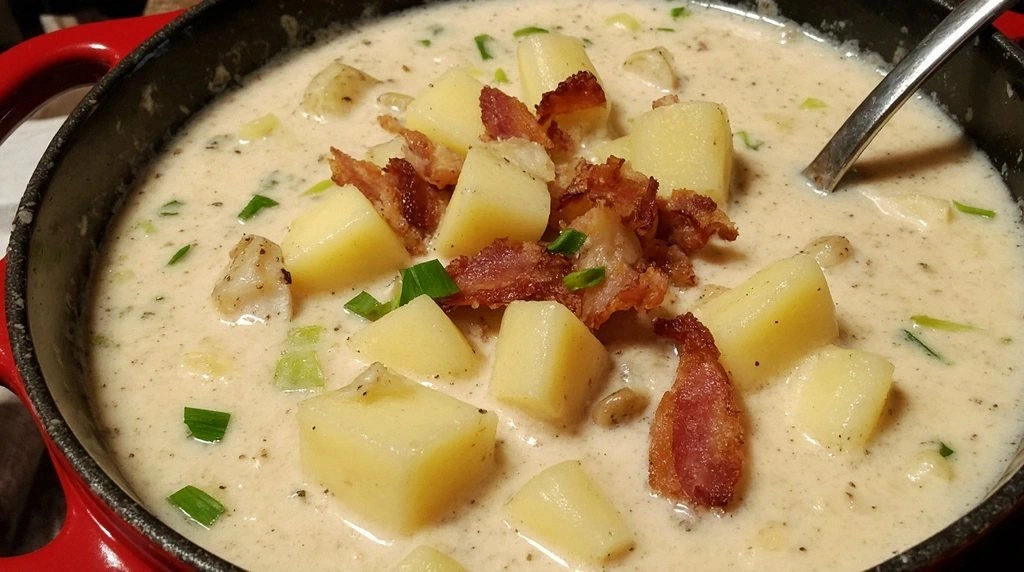
Bacon is more than just a garnish; it adds smokiness, salt, and a satisfying crunch that contrasts the creamy broth. The fat rendered from the bacon also helps carry the flavors of the other ingredients. Cutting the bacon into small cubes ensures even distribution throughout the chowder.
The Texture Crew
Onion, celery, and carrot form the classic mirepoix that builds a savory foundation. The onion brings sweetness, the celery adds a subtle peppery bite, and the carrot contributes a hint of earthiness. Removing any of these would leave the chowder feeling flat and unbalanced.
Potatoes are the heart of the chowder’s body. They absorb the broth’s flavors, giving the dish a comforting heft. Dice them into small, uniform cubes so they cook evenly and maintain a slight chew.
Butter and flour create the roux that thickens the soup. The butter adds richness, while the flour provides structure. A 1:1 ratio ensures the soup thickens without becoming pasty.
The Unexpected Star
White wine is the secret ingredient that lifts the chowder. A splash of dry white wine adds a subtle citrusy brightness that cuts through the creaminess. If you’re avoiding alcohol, a splash of apple cider vinegar or a dash of lemon juice can provide a comparable acidity.
Thyme offers a fragrant, slightly minty note that complements the brine. Fresh thyme is best, but dried works if you’re short on time. Skipping thyme will result in a less complex flavor profile.
The Final Flourish
Heavy cream rounds out the chowder, giving it a silky, luxurious mouthfeel. The cream balances the acidity from the wine and the briny clams. If you prefer a lighter version, replace half the cream with milk or even coconut milk for a subtle tropical twist.
Parsley is the final touch—a bright, herbaceous finish that adds color and a fresh burst of flavor. Sprinkle it just before serving to keep its bright green hue and lively taste.
Everything’s prepped? Good. Let’s get into the real action…
The Method — Step by Step
- Start by chopping the bacon into bite‑size cubes. Place the bacon in a large, heavy‑bottom pot over medium heat. Cook, stirring occasionally, until the fat renders and the bacon is crisp. This should take about 6–8 minutes. The sizzling bacon releases a savory aroma that sets the stage for the chowder. Keep the pot at a steady medium heat to avoid burning.
- Add the diced onion, celery, and carrot to the bacon fat. Sauté for 4–5 minutes until the vegetables soften and the onion turns translucent. The vegetables should release their natural sugars, creating a sweet base for the broth. This is the moment of truth; watch the colors change from raw to golden. Don’t rush this step—slow cooking develops depth.
- Stir in the flour to create a roux. Cook for 2–3 minutes, whisking constantly, until the mixture turns a light golden brown and smells nutty. The roux will thicken the chowder later. Avoid letting it brown too much; you want a subtle, toasted flavor, not a burnt one.
- Pour in the clam juice and a splash of white wine, then stir until the roux dissolves. The mixture should be smooth and free of lumps. Let it simmer for 2 minutes to allow the alcohol to evaporate. The broth should begin to thicken slightly and carry a fragrant, slightly citrusy aroma.
- Add the diced potatoes, thyme, bay leaf, and a pinch of salt. Stir gently to combine. Cover the pot and let it simmer for 10 minutes, or until the potatoes are tender but not mushy. Keep the heat low to maintain a gentle simmer; this prevents the broth from boiling and breaking the clams.
- Introduce the clams and heavy cream, then stir in the diced bacon. Reduce the heat to low and let the chowder simmer for another 5–7 minutes. The clams should be just heated through, and the broth should be silky and rich. This is the stage where the flavors meld into a cohesive whole.
- Remove the bay leaf and taste the chowder. Adjust the seasoning with black pepper and additional salt if needed. The broth should be balanced—neither too salty nor too bland. The pepper adds a subtle heat that complements the briny clams.
- Finally, sprinkle fresh parsley over the chowder and give it a final stir. Serve immediately in bowls, optionally garnished with a few extra bacon bits or a drizzle of olive oil. The bright green parsley provides a fresh contrast to the creamy broth.
That’s it—you did it. But hold on, I’ve got a few more tricks that will take this to another level.
Insider Tricks for Flawless Results
The Temperature Rule Nobody Follows
Many cooks think a high heat is best for soups, but a low, steady simmer is crucial for clam chowder. It allows the flavors to meld without overcooking the clams or breaking the potatoes. I keep the heat on low after adding the broth, letting the chowder gently bubble for the final 10 minutes.
Why Your Nose Knows Best
Your nose is the ultimate judge of flavor. As the chowder simmers, it should release a warm, briny scent that mingles with the subtle sweetness of the vegetables. If you notice a sharp, metallic note, it’s time to reduce the heat.
The 5‑Minute Rest That Changes Everything
After you turn off the heat, let the chowder rest for 5 minutes before serving. This brief pause allows the flavors to settle, the broth to thicken slightly, and the clams to finish absorbing the heat. The result is a richer, more cohesive soup.
The Perfect Garnish
A sprinkle of fresh parsley is classic, but a few grinds of fresh cracked pepper or a drizzle of truffle oil can elevate the dish to restaurant quality. I personally love a light dusting of smoked paprika for a smoky kick.
The Secret to a Smooth Broth
If the broth feels slightly grainy, simply run it through a fine mesh sieve before serving. This removes any flour residue and gives the chowder a silky finish.
The Final Touch of Heat
If you like a touch of heat, add a pinch of cayenne pepper or a few drops of hot sauce before serving. It cuts through the richness and adds a pleasant zing.
Creative Twists and Variations
This recipe is a playground. Here are some of my favorite ways to switch things up:
Smoky Chipotle Chowder
Add a teaspoon of chipotle powder or a few slices of fresh chipotle pepper during the sauté stage. The smoky heat pairs beautifully with the briny clams and gives the chowder a bold twist.
Herb‑Infused Variant
Replace thyme with rosemary or sage for a different aromatic profile. A pinch of dried oregano can also add an earthy note that complements the seafood.
Low‑Carb Version
Swap the diced potatoes for cauliflower florets or turnip cubes. They absorb the broth’s flavors while keeping the carb count low.
Cream‑Free Delight
Use coconut milk instead of heavy cream for a dairy‑free, tropical twist. The coconut adds a subtle sweetness that balances the savory broth.
Crispy Bacon Croutons
Bake bacon bits until crisp and sprinkle them on top as a crunchy garnish. The contrast of textures elevates the chowder’s overall experience.
Vegan Chowder
Omit the bacon and use a plant‑based butter substitute. Add a splash of nutritional yeast for depth and a cheesy note.
Storing and Bringing It Back to Life
Fridge Storage
Cool the chowder to room temperature, then transfer it to an airtight container. Store in the refrigerator for up to 48 hours. The flavors will deepen, and the broth will thicken slightly.
Freezer Friendly
For longer storage, place the chowder in a freezer‑safe container, leaving 2 inches of headspace. It will keep well for up to 3 months. Thaw overnight in the refrigerator before reheating.
Best Reheating Method
Reheat gently over low heat, stirring frequently. Add a splash of water or broth to thin the broth if it has thickened too much. The soup should be heated through but not boiled to preserve the clams’ tenderness.