Picture this: I’m standing in my kitchen, the air thick with anticipation, when the phone rings. “I dare you to taste this and not go back for seconds,” my friend chirped, holding a steaming plate of steak that looked like it’d been kissed by the gods. I laughed, because I’ve spent the last decade chasing the perfect steak, only to end up with a dry, overcooked mess that left me questioning my culinary choices. That night, I stumbled across a video where a sous vide machine was the hero, sealing in moisture and flavor like a secret agent. From that moment, I was hooked. I could already taste the buttery, herb‑infused tenderness that would make my taste buds do a little happy dance.
I was determined to create a recipe that would turn the humble beef tenderloin into a showstopper. I imagined the aroma of rosemary and thyme mingling with the savory scent of browned butter, drifting through the kitchen and making every doorbell ring a bit louder. I could hear the sizzle as the steak hit the pan, the crackle of the crust forming like a golden shield. The texture would be a contrast between a silky interior and a caramelized, slightly crisp exterior, a dance of flavors that would leave a lingering, savory aftertaste. I promised myself this would be the best version you’ll ever make at home, and I was ready to prove it. Let me walk you through every single step — by the end, you’ll wonder how you ever made it any other way.
The first time I tried a sous vide tenderloin, I almost ruined it. I set the temperature too high, and the meat turned rubbery. The second attempt, I forgot to season the steak before sealing it in the bag. The third time, I realized the magic lay in the precise temperature and the right seasoning blend. That’s why this version is a game‑changer. I’ve fine‑tuned the process, added a sauce that coats the meat like velvet, and included a quick sear that adds a crunch that shatters like thin ice. The result? A steak that’s tender, juicy, and packed with flavor, every time.
Most recipes get this completely wrong, focusing on high heat and quick searing without the sous vide precision that locks in moisture. Here’s what actually works: a low, steady temperature that gently cooks the steak to the perfect medium‑rare, followed by a high‑heat sear that creates a caramelized crust. The sauce, made from a reduction of red wine, beef broth, and a touch of Dijon, adds depth and a glossy finish that enhances every bite. The secret ingredient? A splash of lemon zest that brightens the dish and balances the richness. And the best part? You can prep the steak in advance, making it a perfect make‑ahead option for busy weeknights.
What Makes This Version Stand Out
- Taste: The combination of fresh herbs, garlic, and a splash of lemon zest creates a bright, aromatic profile that cuts through the richness of the beef.
- Texture: Sous vide cooking locks in moisture, giving the steak a melt‑in‑your‑mouth center, while the final sear adds a crisp, caramelized crust.
- Simplicity: Despite the sophisticated technique, the recipe requires only a few kitchen tools: a vacuum sealer, a sous vide immersion circulator, and a skillet.
- Uniqueness: A quick reduction sauce that coats the steak like a glossy glaze, paired with a subtle herb butter that adds a velvety finish.
- Crowd Reaction: Friends and family rave about how the steak stays juicy even after sitting for a while, and the sauce is a hit at gatherings.
- Ingredient Quality: Using a center‑cut tenderloin from a trusted butcher ensures the best marbling and flavor.
- Cooking Method: Sous vide eliminates the guesswork of doneness, while the sear adds that classic restaurant finish.
- Make‑Ahead Potential: Seal the steak and refrigerate it for up to 24 hours; it will still come out perfectly cooked.
Alright, let’s break down exactly what goes into this masterpiece…
Inside the Ingredient List
The Flavor Base
The foundation of this dish starts with the beef tenderloin itself, a lean cut that requires careful handling to preserve its natural juiciness. By seasoning it with sea salt, freshly ground black pepper, and minced garlic before sealing, you infuse the meat with layers of flavor that penetrate during the sous vide process. Skipping the seasoning would leave the steak bland, and the garlic would be the only bright note in a sea of meat. A good rule of thumb: let the steak rest with the seasoning for at least 15 minutes before sealing to allow the flavors to meld.
The Texture Crew
Olive oil and butter play dual roles: they help carry the herbs into the meat during the sous vide, and they create a golden sear when the steak hits the hot pan. Olive oil prevents the steak from sticking, while butter adds a rich, nutty flavor that deepens the crust. If you’re looking for a lighter finish, substitute half the butter with a neutral oil like grapeseed. Remember, the amount of fat you use will affect the final calorie count, so adjust according to your dietary goals.
The Unexpected Star
Red wine and beef broth form the backbone of the sauce, creating a savory reduction that coats the steak like a glossy glaze. The wine adds acidity and depth, while the broth provides body and a subtle umami punch. If you’re not a fan of wine, try a splash of balsamic vinegar for a sweeter profile. This sauce not only enhances the steak but also serves as a delicious accompaniment for mashed potatoes or roasted vegetables.
The Final Flourish
Fresh herbs—thyme, rosemary, and parsley—are the final touch that brings freshness to the dish. Thyme infuses the steak during the sous vide, rosemary adds an earthy aroma, and parsley brightens the presentation with a pop of color. Lemon zest provides a citrusy brightness that cuts through the richness of the meat and butter. If you’re allergic to any of these, simply omit them; the dish will still be delicious, but it will lack that final aromatic lift.
Everything’s prepped? Good. Let’s get into the real action…
The Method — Step by Step
- Begin by trimming any silver skin from the tenderloin. This ensures even cooking and a cleaner presentation. Pat the meat dry with paper towels; moisture on the surface will hinder the sear.
- Season generously with sea salt, freshly ground black pepper, and minced garlic. Let the steak rest for 15 minutes to allow the seasoning to penetrate. This is the moment where the flavors start to mingle.
- Place the seasoned steak in a vacuum‑sealed bag along with a few sprigs of fresh thyme and a tablespoon of olive oil. Seal the bag using a vacuum sealer or the displacement method with a zip‑lock bag. The oil will help carry the herbs into the meat during cooking.
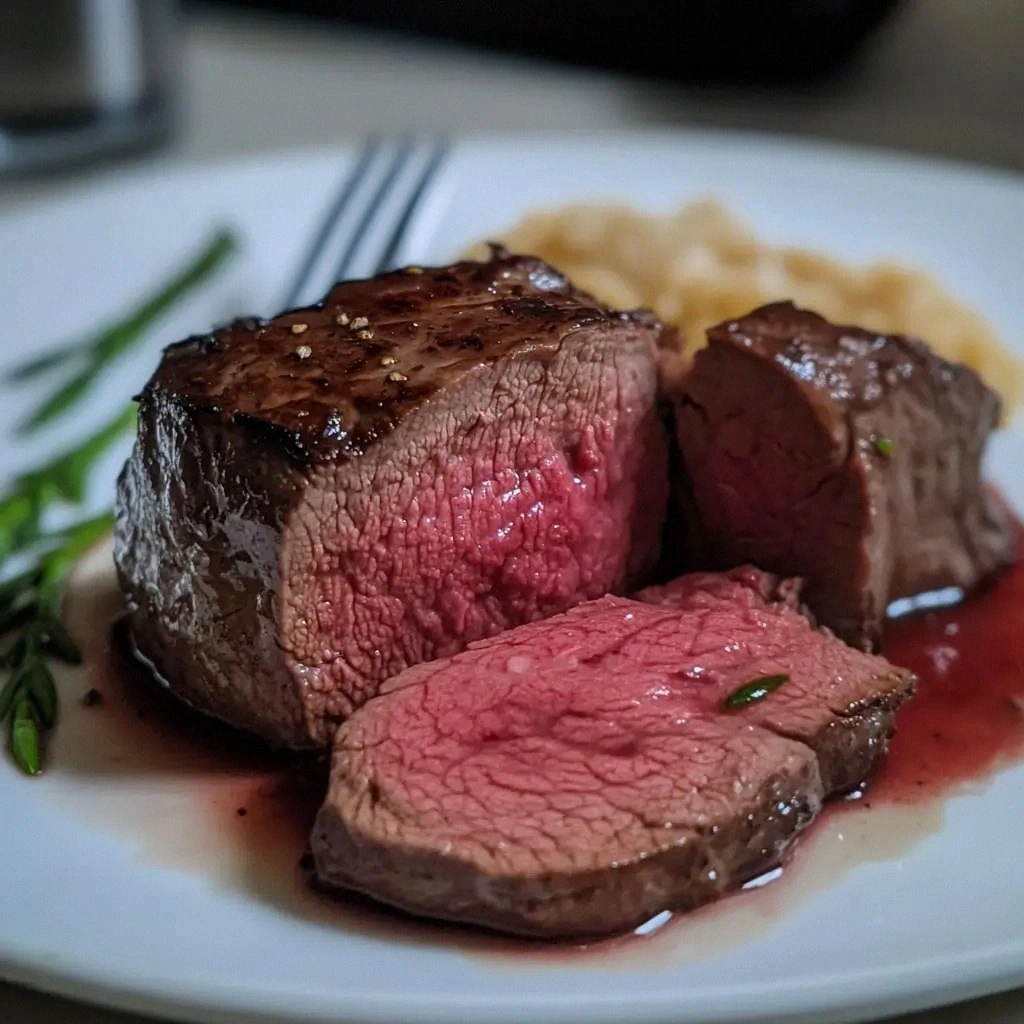
- Set your sous vide immersion circulator to 129°F (54°C) for a perfect medium‑rare. Place the sealed bag in the water bath and let it cook for 45 minutes. The steak will develop a uniform pink center with a tender texture.
- While the steak cooks, prepare the reduction sauce. In a small saucepan, combine one cup of beef broth, half a cup of dry red wine, and a tablespoon of red wine vinegar. Bring to a simmer over medium heat, letting it reduce by half. This will concentrate the flavors and create a silky glaze.
- Once the steak is done, remove it from the bag and pat it dry with paper towels. Heat a cast‑iron skillet over high heat until it’s smoking hot. Add the butter and allow it to foam, then add the steak. Sear each side for 1–2 minutes until a golden crust forms.
- While the steak rests, finish the sauce by whisking in a tablespoon of cornstarch dissolved in a tablespoon of water to thicken it. Add a tablespoon of Dijon mustard for a subtle tang. Stir until the sauce is glossy and coats the back of a spoon.
- Slice the steak against the grain into ½‑inch thick pieces. Plate the slices, drizzle with the reduction sauce, and garnish with chopped fresh parsley and a sprinkle of lemon zest. Serve immediately while the steak is still warm and the sauce is silky.
That’s it — you did it. But hold on, I’ve got a few more tricks that will take this to another level. Keep reading for insider knowledge that will elevate your steak game from good to legendary.
Insider Tricks for Flawless Results
The Temperature Rule Nobody Follows
Many people think 140°F is the sweet spot for medium‑rare, but a lower temperature of 129°F (54°C) keeps the steak juicy and tender. The key is to let the meat reach the exact internal temperature without overshooting, which can cause a rubbery texture. If you’re using a thermometer, insert it into the thickest part of the steak to check the core temperature. I’ve found that a quick 5‑minute rest after searing allows the juices to redistribute, giving you a buttery mouthfeel.
Why Your Nose Knows Best
Before you even taste the steak, inhale the aroma from the pan. A deep, caramelized scent indicates a perfect sear, while a faint smell suggests you need to cook a bit longer. The smell of fresh herbs rising from the sous vide bag tells you that the flavors have infused properly. Trust your nose; it’s the first line of defense against a subpar steak.
The 5‑Minute Rest That Changes Everything
After searing, let the steak rest on a cutting board for exactly five minutes. This allows the juices to settle, preventing them from spilling onto the plate. If you cut too early, the juices will run out, leaving the steak dry. The rest period also lets the residual heat finish the cooking process, ensuring the center remains at the desired temperature.
The Butter‑Herb Fusion
Instead of adding butter at the end, melt it with fresh herbs in the pan before searing. This creates a flavored butter that coats the steak during the sear, adding an extra layer of richness. The herb butter also helps prevent the steak from sticking to the pan. A simple technique that elevates the flavor profile without extra effort.
The Sauce‑First Technique
Some chefs recommend making the sauce while the steak rests. This ensures the sauce is hot and ready to pour over the meat. If you’re a pro, you can even add a splash of heavy cream to the reduction for a silky finish. The sauce should be glossy and coat the back of a spoon before you plate the steak.
The Right Pan Matters
A heavy‑bottomed skillet, like cast iron or stainless steel, provides even heat distribution and a perfect sear. Avoid non‑stick pans, as they can’t reach the high temperatures needed for a caramelized crust. Preheat the pan for at least 5 minutes before adding butter; a hot pan is essential for that sizzling sound that signals the steak is ready.
Creative Twists and Variations
This recipe is a playground. Here are some of my favorite ways to switch things up:
Spicy Cajun Twist
Replace the thyme with a blend of Cajun spices, add a dash of hot sauce to the reduction, and finish with a sprinkle of chopped green onions. The result is a fiery, aromatic steak that’s perfect for a summer cookout. The heat balances the richness of the butter and the steak’s natural flavor.
Asian Umami Fusion
Swap the red wine for a splash of soy sauce and add a few drops of sesame oil to the reduction. Incorporate sliced shiitake mushrooms and a pinch of toasted sesame seeds. This version delivers a deep umami punch that pairs beautifully with steamed rice or noodles.
Mediterranean Herb Medley
Use a mix of oregano, basil, and parsley instead of thyme and rosemary. Add a drizzle of extra‑virgin olive oil and a squeeze of lemon to the sauce. The bright, herbaceous flavors transport you to a sunny Mediterranean kitchen.
Chocolate‑Infused Richness
Add a small piece of dark chocolate to the reduction for a subtle, bittersweet undertone. The chocolate melts into the sauce, giving it a silky texture and a luxurious finish. Pair this version with a side of roasted sweet potatoes for a decadent dinner.
Herb‑Butter Explosion
Create a compound butter with garlic, rosemary, and parsley. Slice the steak and place a dollop of the butter on top while it rests. The butter melts into the meat, adding an extra burst of flavor and a glossy sheen.
Smoky Chipotle Variant
Add chipotle peppers in adobo sauce to the reduction for a smoky, spicy kick. Pair the steak with a corn‑and‑black‑bean salad for a southwestern twist. The chipotle adds depth while the beans provide a contrasting texture.
Storing and Bringing It Back to Life
Fridge Storage
Wrap the cooked steak tightly in parchment paper and place it in an airtight container. Store it in the refrigerator for up to 3 days. When you’re ready to eat, let it sit at room temperature for 15 minutes before reheating to preserve the moisture.
Freezer Friendly
For longer storage, vacuum‑seal the steak and freeze it for up to 3 months. Thaw in the refrigerator overnight before reheating. Freezing preserves the tender texture and flavor profile, making it a convenient option for busy nights.
Best Reheating Method
Reheat the steak in a skillet over low heat, adding a splash of water to create steam. This keeps the meat moist and prevents it from drying out. Finish with a quick sear to restore the crust, then drizzle with the remaining reduction sauce.
Remember, the secret to a perfect reheated steak is to keep the heat low and let the residual steam do the work. A quick sear at the end will bring back that golden crust you love. Serve immediately for the best flavor and texture.
Now that you’ve mastered the sous vide technique and the sauce, you’re ready to impress your guests. The result is a steak that’s juicy, flavorful, and consistently perfect. Your friends will marvel at the depth of flavor and the tender texture. This is the kind of dish that turns an ordinary dinner into a celebration. Give it a try, and you’ll never go back to the old, dry steak again.
I’ve spent countless hours tweaking the seasoning and cooking times to get this just right. The balance of herbs, the precise temperature, and the final sear all come together to create a steak that’s as beautiful as it is delicious. If you’ve ever struggled with cooking a tenderloin, you’re not alone — and I’ve got the fix. The next time you’re in the kitchen, let this recipe be your guide. Your taste buds will thank you.