I was halfway through a chaotic Sunday dinner when the kitchen decided to stage a rebellion. The pot on the stove was about to erupt, the onions were screaming, and I realized I had a craving that could only be satisfied by a hearty, comforting stew. I pulled out a bottle of Guinness, because why not let the beer do the heavy lifting? The smell of roasted beef, caramelized onions, and dark beer filled the air, and the sound of the bubbling pot sounded like a promise of a midnight feast. I know you’ve tried your share of stews, but this one—this one is going to change the game for you.
Picture this: you’re standing over a single pot, the heat is steady, and the beef is browning like a golden sunrise. The aroma is rich, with a subtle sweetness from the caramelized onions that mingle with the deep, malty notes of Guinness. As you stir, the broth thickens, turning into a glossy, velvety sauce that clings to each cube of beef. The sound of the liquid sizzles against the pan, and you can feel the heat radiating through the wooden spoon. The first bite is a burst of savory depth, a symphony of flavors that makes you want to shout, “I dare you to taste this and not go back for seconds!”
What makes this version stand out? It’s not just the recipe; it’s the philosophy behind it. I’ve stripped away the fluff and brought in a bold, unapologetic approach to flavor. I’ve turned a classic stew into a single-pot masterpiece that’s simple, yet complex enough to wow any crowd. I’ve added a secret ingredient that many forget: a splash of Worcestershire sauce that brings a subtle umami kick. I’ve also tweaked the cooking method so that the beef stays tender and the sauce stays luscious without a second pot. And if you think a stew is just a slow-cooked dish, think again—this one is a quick, high-impact experience that will have everyone asking for the recipe.
Let me walk you through every single step — by the end, you’ll wonder how you ever made it any other way. I promise you, the next time you open a bottle of beer, you’ll be tempted to pour it straight into a pot. The next time you chop an onion, you’ll think about the depth of flavor you’re about to create. And the next time you taste the finished dish, you’ll know that this is hands down the best version you’ll ever make at home.
What Makes This Version Stand Out
- Flavor Depth: The combination of Guinness and Worcestershire sauce creates a complex, layered taste that goes beyond the usual beef stew profile. It’s like a dark, rich chocolate with a hint of sea salt.
- Texture Perfection: The beef is browned to a caramelized crust before simmering, which locks in juices and gives a satisfying bite. The sauce thickens without becoming clumpy.
- One-Pot Simplicity: No need for multiple pans or pots—everything happens in a single vessel, saving time and cleanup.
- Crowd‑Pleaser: The hearty, comforting nature of this stew makes it ideal for family dinners, potlucks, or a cozy night in.
- Ingredient Quality: Using a good cut of beef and fresh vegetables elevates the dish to a gourmet level, even though the process is straightforward.
- Make‑Ahead Friendly: The stew keeps well in the fridge and can be reheated without losing flavor or texture.
- Versatile Flavor Profile: The Guinness base allows for easy variations—add mushrooms, swap in lamb, or turn it into a vegetarian version with hearty beans.
Alright, let’s break down exactly what goes into this masterpiece. And before we dive in, here’s a quick kitchen hack that will save you time and keep your pan clean.
Inside the Ingredient List
The Flavor Base
At the heart of this stew is the Guinness beer, which adds depth, a subtle bitterness, and a velvety mouthfeel. The beer’s caramel notes mingle with the savory beef broth, creating a sauce that feels both hearty and refined. If you skip the Guinness, you’ll lose that signature dark richness; the stew will taste like a plain, over‑boiled broth.
The beef broth is the second cornerstone. It provides the liquid foundation and carries the flavors of the meat and vegetables. A low-sodium broth keeps the salt level in check, while a homemade broth adds an extra layer of authenticity. If you’re short on broth, you can substitute water, but the stew will be less robust.
Tomato paste is the secret binder that gives the sauce a slight acidity and a deep color. It also thickens the sauce naturally. Without it, the stew will remain too thin and watery. If you’re avoiding tomatoes, a splash of red wine or a teaspoon of balsamic vinegar can mimic the acidity.
The Texture Crew
Beef chuck, cut into 1½ inch cubes, is the star. Its marbling ensures tenderness and a juicy bite after slow cooking. Cutting the beef too small can cause it to become mushy; too large and it won’t cook evenly. Keep the cubes uniform for consistent results.
Carrots and potatoes add body and natural sweetness. They also absorb the beer’s flavors, turning into soft, flavorful morsels. If you prefer a lower-carb version, replace the potatoes with turnips or skip them entirely.
All-purpose flour is used to lightly coat the beef before browning, creating a subtle crust that locks in juices and thickens the sauce. If you’re gluten‑free, a cornstarch slurry works just as well.
The Unexpected Star
Worcestershire sauce is the unsung hero that brings a savory umami punch. Its tangy, slightly sweet profile complements the beer and beef beautifully. Many people skip it, but trust me—the difference is noticeable. If you’re on a low‑sodium diet, look for a reduced‑sodium version or use a splash of soy sauce.
Fresh thyme and a bay leaf provide aromatic herbs that infuse the stew with herbal undertones. Removing them will leave the dish feeling flat and lacking depth. For a subtle twist, add a pinch of smoked paprika to enhance the smoky notes of the Guinness.
The Final Flourish
Butter at the end adds a silky richness that coats the sauce and beef, elevating the overall mouthfeel. Skipping it will result in a drier, less luxurious texture. If you’re vegan, use a plant‑based butter alternative.
Fresh parsley, chopped, is a bright garnish that adds color and a fresh finish. It cuts through the richness and balances the flavors. Feel free to sprinkle it over the stew just before serving.
Everything's prepped? Good. Let's get into the real action...
The Method — Step by Step
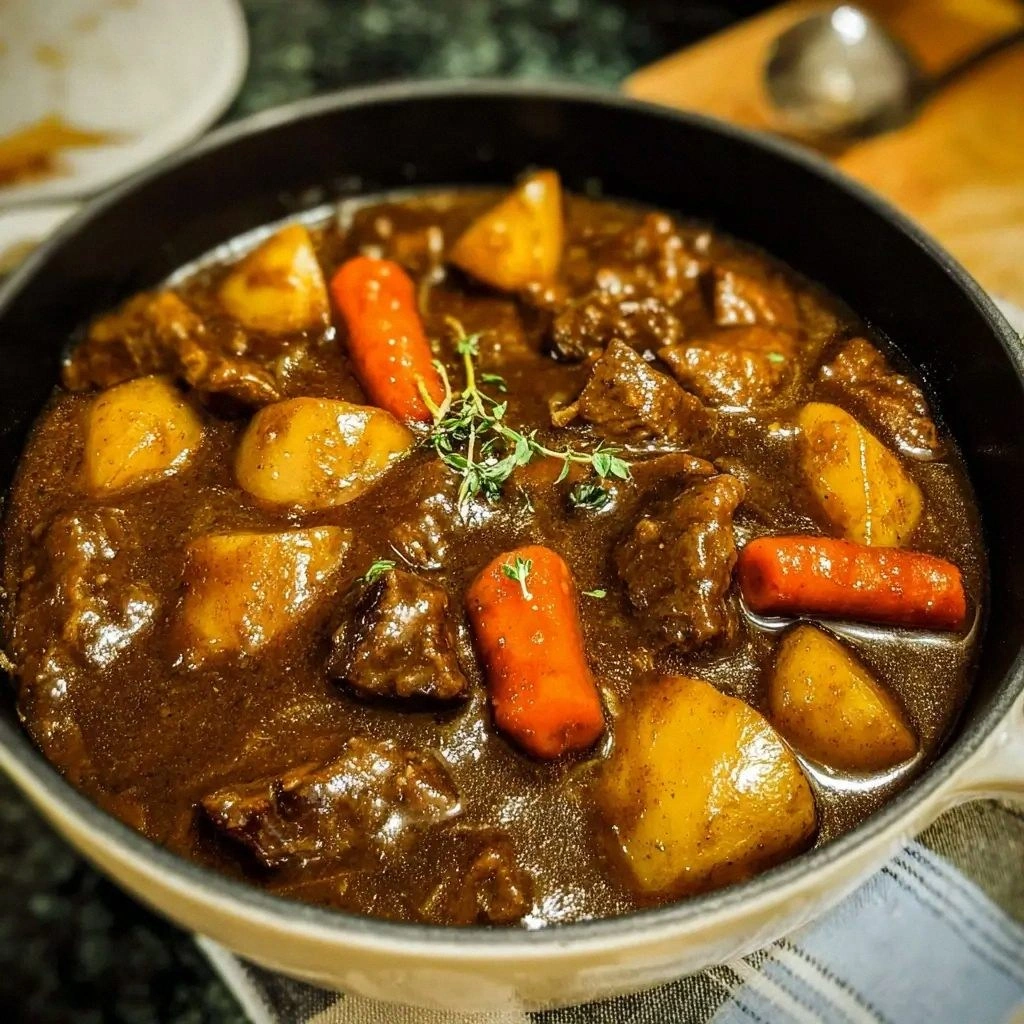
- Heat the olive oil in a large, heavy‑bottomed pot over medium heat. Add the beef cubes in a single layer, browning them on all sides until they develop a deep, caramelized crust. Don’t overcrowd the pot; if necessary, brown the beef in batches. This step locks in juices and gives the stew a rich, savory base. When the beef is browned, set it aside on a plate.
- In the same pot, add the diced onion and minced garlic. Sauté until the onion is translucent and fragrant, about 4–5 minutes. The garlic should release a sweet aroma, signaling that it’s ready. Stir occasionally to prevent sticking. This creates the flavor foundation for the stew.
- Return the browned beef to the pot. Sprinkle the flour over the meat and stir to coat each cube. The flour will help thicken the sauce as it cooks. Let it toast for 1–2 minutes, then add the Guinness beer and beef broth, scraping up any browned bits from the bottom of the pot. Those bits are full of flavor.
- Stir in the tomato paste, Worcestershire sauce, thyme, and bay leaf. Bring the mixture to a gentle boil, then reduce the heat to low. Cover the pot and let it simmer for 1 hour, stirring occasionally. The long, low simmer allows the beef to become tender and the flavors to meld. Keep an eye on the liquid level; add a splash of water if it reduces too much.
- Add the sliced carrots and diced potatoes to the pot. Stir gently to combine, then cover and continue simmering for an additional 30 minutes, or until the vegetables are tender and the beef is fork‑tender. The vegetables will absorb the beer’s richness, turning into soft, flavorful companions to the meat.
- Remove the bay leaf and season the stew with salt and pepper to taste. If you prefer a slightly sweeter note, add a pinch of brown sugar. Taste as you go, adjusting the seasoning to your liking. The stew should be a balance of savory, sweet, and slightly bitter.
- Finish the stew by stirring in the butter until it melts and coats the surface. This step adds silky richness and a glossy sheen to the sauce. If you’re making a vegan version, use a plant‑based butter alternative. The butter also helps to round out the beer’s sharpness.
- Garnish with fresh parsley just before serving. The parsley adds a burst of color and a fresh, herbaceous finish. Serve hot over mashed potatoes, crusty bread, or a bed of buttered noodles.
That's it — you did it. But hold on, I've got a few more tricks that'll take this to another level. From subtle seasoning tweaks to plating ideas, these insider tips will help you serve a stew that feels restaurant‑quality while still being a comfort‑food staple.
Insider Tricks for Flawless Results
The Temperature Rule Nobody Follows
Many cooks think a high heat is necessary to develop flavor, but the truth is low, steady heat does wonders. Simmering the stew at a gentle boil allows the flavors to integrate without scorching the beer. If you’re in a hurry, keep the heat at medium and stir frequently to prevent sticking.
Why Your Nose Knows Best
Before you taste the stew, pause and inhale deeply. The aroma will tell you if the seasoning is balanced. If it smells too acidic, add a touch of honey or brown sugar. If it feels flat, a splash of red wine can revive the depth.
The 5‑Minute Rest That Changes Everything
After you finish cooking, let the stew rest for 5 minutes off the heat. This allows the flavors to settle and the sauce to thicken slightly. During this time, the beef fibers relax, making each bite more tender.
The Secret to a Thick, Glossy Sauce
If you find the sauce too thin, create a quick slurry of cornstarch and cold water. Stir it into the stew in a single, steady stream while the pot is still on low heat. This will thicken the sauce without adding extra flour flavor.
The Final Touch: A Dash of Cream
Adding a splash of heavy cream at the end gives the stew a velvety finish and balances the beer’s bitterness. If you’re lactose intolerant, substitute with coconut milk or a plant‑based cream.
The Flavor Boost: A Touch of Smoke
A pinch of smoked paprika or a few drops of liquid smoke can deepen the stew’s smoky profile, especially if you’re using a lighter beer. Use sparingly; you want to enhance, not overpower.
Creative Twists and Variations
This recipe is a playground. Here are some of my favorite ways to switch things up:
Mushroom Majesty
Swap the carrots and potatoes for a mix of shiitake, cremini, and portobello mushrooms. The earthy mushrooms absorb the beer’s richness, creating a vegetarian version that still feels hearty.
Lamb & Guinness
Replace the beef chuck with lamb shoulder cubes for a richer, slightly gamey flavor. The lamb’s fat content pairs beautifully with the stout, producing a stew that feels indulgent.
Spicy Irish Twist
Add a teaspoon of smoked paprika and a pinch of cayenne pepper to give the stew a subtle heat. The spice complements the beer’s bitterness and adds a new dimension to the dish.
Herb‑Infused Delight
Introduce fresh rosemary and a bay leaf bundle for an aromatic herb profile. The rosemary’s piney scent elevates the stew’s fragrance, making it feel like a true Irish feast.
Sweet & Savory Surprise
Incorporate diced sweet potatoes instead of regular potatoes for a subtle sweetness. The sweet potatoes balance the beer’s bitterness and add a comforting, autumnal feel.
Crispy Finish
After the stew is done, transfer the beef to a hot skillet and sear it briefly to create a crispy exterior. This gives the stew a textural contrast that’s both satisfying and visually appealing.
Storing and Bringing It Back to Life
Fridge Storage
Cool the stew completely before transferring it to an airtight container. Store in the refrigerator for up to 4 days. The flavors continue to meld, making it even richer the next day.
Freezer Friendly
For longer storage, portion the stew into freezer‑safe containers and freeze for up to 3 months. Thaw overnight in the refrigerator before reheating. The texture remains tender, and the beer’s flavors persist.
Best Reheating Method
Reheat on the stovetop over low heat, adding a splash of water or broth to loosen the sauce. Stir frequently to prevent sticking. A quick 5‑minute simmer will restore the stew’s silky texture. Add a tiny splash of water before reheating — it steams back to perfection.