Picture this: I'm standing in my kitchen at 11 PM on a Tuesday night, the windows fogged from the steam of boiling potatoes, and I'm frantically texting my German neighbor Ingrid because I've managed to ruin yet another potato salad. My American-style mayo-heavy concoction has been met with polite smiles but untouched plates at every potluck I've brought it to. Ingrid's response was swift and brutal: "Liebchen, you've been doing it all wrong. Real German potato salad has no mayo. It has soul."
That was the night everything changed. The night I discovered that German potato salad isn't just a side dish — it's a revelation that will make you question every picnic contribution you've ever made. The tangy vinegar dressing, the crispy bacon bits, the way those warm potatoes soak up every drop of that addictive bacon-infused vinaient — this is the stuff that converts potato salad haters into devoted disciples. I'll be honest with you: I ate half the batch straight from the serving bowl that first successful night, standing over my kitchen counter in my pajamas, promising myself I'd share the next one.
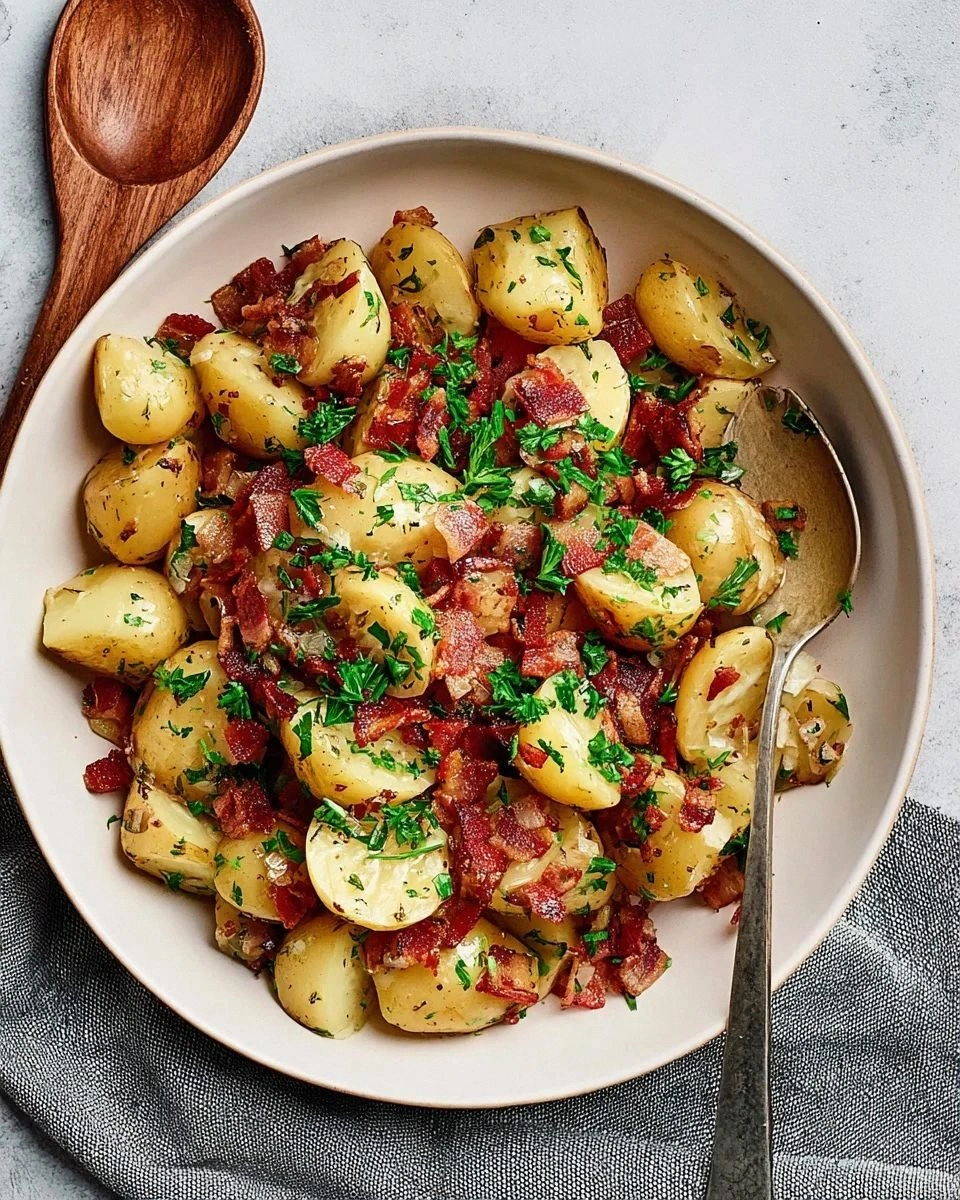
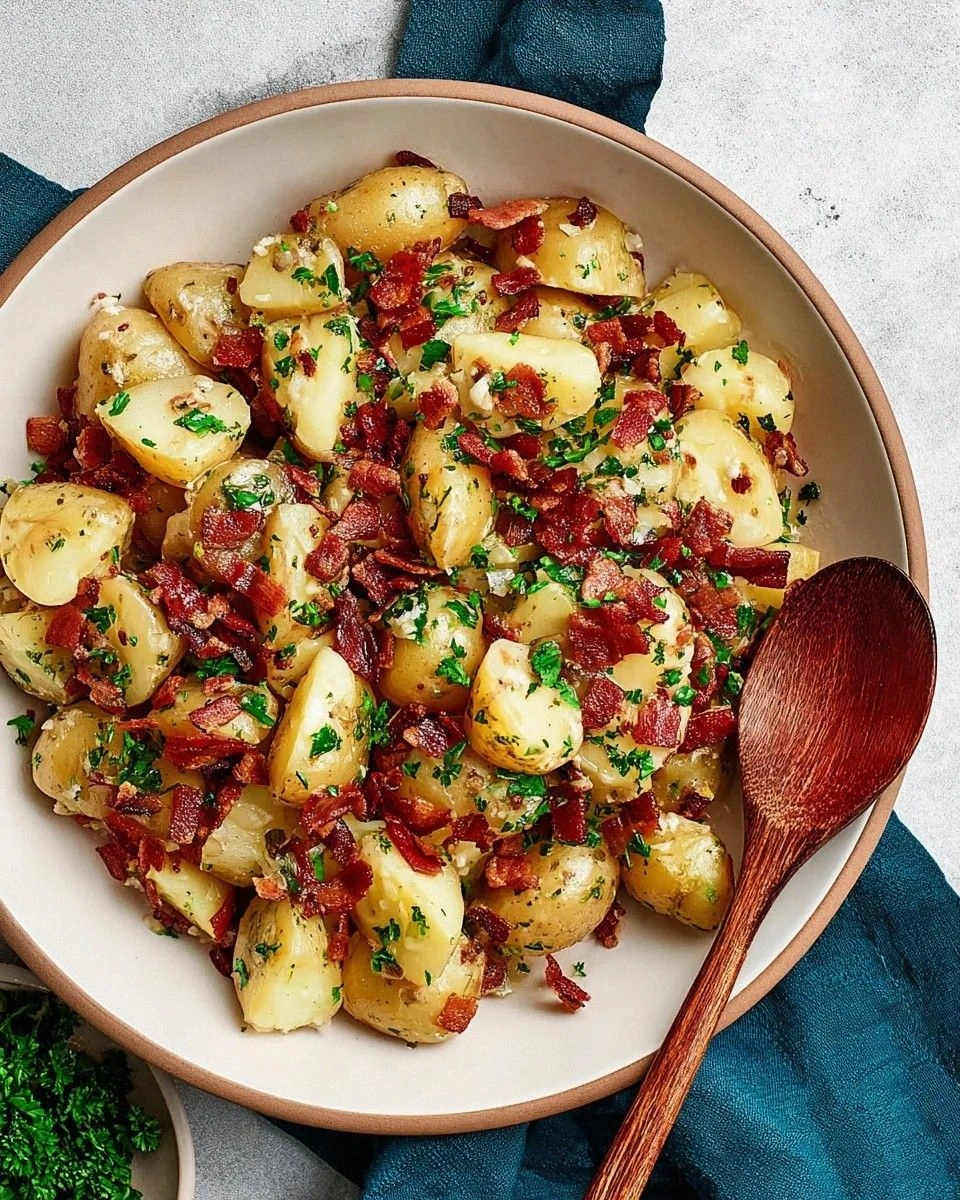
Most recipes get German potato salad completely wrong. They treat it like a cold mayo-based salad that happens to be served warm, missing the entire point of this Swabian masterpiece. The real deal is served warm or room temperature, dressed in a glossy bacon vinaigrette that coats each potato slice like liquid gold. It's the kind of dish that makes grown men weep at barbecues and has vegetarians questioning their life choices when they smell that bacon rendering.
After three months of testing, tweaking, and taste-testing (my neighbors love me), I've cracked the code to the perfect German potato salad. This version combines traditional Swabian techniques with a few modern twists that'll make your taste buds sing. The secret lies in the timing — adding the dressing while the potatoes are still warm so they absorb every layer of flavor, and using the bacon fat as the base for the vinaigrette. Trust me, once you try this method, you'll never go back to cold, gloppy potato salad again.
What Makes This Version Stand Out
Bacon-Forward: We're not just sprinkling bacon on top here — we're building the entire flavor foundation on rendered bacon fat, creating a smoky depth that permeates every single bite. The bacon isn't just a garnish; it's the star of the show that transforms humble potatoes into something extraordinary.
Warm Dressing Magic: While most potato salads are dressed cold, this version capitalizes on the potatoes' warmth to create a glossy coating that clings perfectly. The heat opens up the potato's pores (yes, potatoes have pores — stay with me here) allowing them to drink in all that tangy, bacon-y goodness.
Vinegar Balance: After testing everything from champagne vinegar to plain white, I've found that a combination of apple cider vinegar and white wine vinegar creates the perfect tangy backbone. It's sharp enough to cut through the richness but smooth enough that you keep coming back for more.
Texture Contrast: By slicing the potatoes while warm and dressing them immediately, we achieve that perfect balance of tender interior with slightly firm edges. The addition of crispy bacon bits and fresh parsley creates a symphony of textures that keeps every bite interesting.
Make-Ahead Friendly: Unlike mayo-based salads that get sad and watery, this version actually improves as it sits. The flavors meld and deepen, making it perfect for potlucks, picnics, and those moments when you need to impress without the stress.
Crowd-Pleasing Power: I've served this to everyone from picky toddlers to my 85-year-old German grandmother-in-law, and the result is always the same: empty bowls and recipe requests. It's the ultimate barbecue sidekick that makes grilled meats taste even better.
One-Pan Simplicity: Everything except the potato boiling happens in one skillet, meaning fewer dishes and more time to enjoy that second helping. The same pan that cooks your bacon becomes the vessel for building that incredible dressing.
Inside the Ingredient List
The Foundation: Choosing Your Potatoes
The potato selection makes or breaks this salad, and after testing everything from russets to fingerlings, I've discovered that medium Yukon Golds are the gold standard. They hold their shape when warm but still absorb the dressing like little flavor sponges. Waxy potatoes like red or new potatoes work in a pinch, but they lack that creamy interior that makes German potato salad so addictive. Avoid russets entirely — they'll disintegrate into mush faster than your willpower at a chocolate buffet.
Size matters more than you'd think. Golf ball to tennis ball sized potatoes cook evenly and slice beautifully, while larger specimens end up with overcooked exteriors and chalky centers. If you can only find large potatoes, cut them into uniform chunks before boiling — just reduce the cooking time and start checking for doneness earlier.
The freshness factor is crucial here. Potatoes that have been sitting in your pantry since the Clinton administration will taste flat and lifeless no matter how much bacon you add. Look for firm potatoes with tight, unwrinkled skin and no green spots or sprouting eyes. That green tinge isn't just unappetizing — it contains solanine, a compound that tastes bitter and can make you feel pretty lousy.
The Flavor Base: Bacon and Alliums
Thick-cut bacon isn't just a suggestion — it's essential for rendering enough fat to create the dressing. Those thin, sad supermarket strips will shrivel into nothingness faster than your motivation on a Monday morning. You want bacon that's at least 1/8-inch thick, with a good meat-to-fat ratio that'll give you substantial bits to scatter through the salad.
Yellow onions provide the perfect balance of sweetness and sharpness, melting into the dressing while still maintaining some texture. Red onions are too aggressive and will overpower the delicate balance, while sweet onions like Vidalia make the final salad too sweet. Slice them thin enough to soften quickly but not so thin they disappear entirely.
Fresh garlic is non-negotiable. That pre-minced jarred stuff tastes like disappointment and regret. One large clove, minced to a paste with a pinch of salt, will perfume the entire dressing with its pungent magic. If you're a true garlic lover, go ahead and add two — I won't judge, mainly because I've done it myself and lived to tell the tale.
The Tang Team: Vinegars and Mustard
The vinegar combination is where the magic happens. Apple cider vinegar brings fruity complexity and mellow acidity, while white wine vinegar adds sharp, clean brightness. Using just one or the other creates a one-dimensional dressing that either tastes like salad dressing or pickle juice. Together, they create a perfectly balanced tang that makes your mouth water just thinking about it.
Dijon mustard isn't just for show — it acts as an emulsifier, helping the vinegar and bacon fat combine into a cohesive dressing. It also adds subtle complexity and a gentle heat that blooms on your palate. Skip the yellow hot dog mustard here — it's too aggressive and will make your salad taste like ballpark food in the worst possible way.
A touch of sugar might seem counterintuitive in a savory salad, but it's essential for balancing the vinegar's acidity. You won't taste it as sweetness — instead, it rounds out the flavors and prevents that harsh vinegar bite that makes people wince. If you're avoiding sugar, a tiny drizzle of honey works beautifully and adds another layer of flavor complexity.
The Final Flourish: Herbs and Seasonings
Fresh parsley isn't just a garnish — it's an integral part of the flavor profile that adds brightness and cuts through the richness. Flat-leaf (Italian) parsley has more flavor than curly, and it's easier to chop finely. Add it at the very end to maintain its fresh, green flavor and vibrant color.
Caraway seeds are my secret weapon, adding that unmistakable German flavor that'll transport you to a Bavarian beer garden. Toast them briefly in the rendered bacon fat to release their aromatic oils before adding the other dressing ingredients. If you're not a caraway fan (looking at you, rye bread haters), you can skip them, but you're missing out on that authentic German character.
Freshly ground black pepper makes a world of difference. Those pre-ground pepper dust has about as much flavor as cardboard. A few good cracks from a pepper mill add floral notes and gentle heat that ties everything together. White pepper works too if you want to maintain the pale color of traditional German potato salad.
The Method — Step by Step
- Start with cold, salted water — this is crucial for even cooking. Place your scrubbed potatoes in a large pot, cover with cold water by an inch, and add enough salt that it tastes like the sea. Bring to a boil over medium-high heat, then reduce to a gentle simmer. The potatoes are done when a paring knife slides in with almost no resistance, about 15-20 minutes depending on size. Don't walk away — overcooked potatoes will fall apart faster than my resolve at an all-you-can-eat buffet.
- While the potatoes bubble away, it's bacon time. Cut your bacon into 1/2-inch pieces — this gives you the perfect ratio of crispy edges to chewy centers. Place them in a cold skillet and turn the heat to medium. Starting cold renders more fat and prevents the bacon from curling up like it's trying to escape. Cook until the bacon is crisp and the fat has rendered, about 8-10 minutes. That sizzle when it first hits the pan? Absolute perfection.
- Remove the bacon with a slotted spoon and drain on paper towels. Now, here's where most people mess up — they pour off some of the fat. Don't you dare! That liquid gold is the base of your dressing. You should have about 1/4 cup of rendered fat. If you have less, add a splash of olive oil. If you have more, carefully pour off the excess, but save it for cooking eggs later.
- Add your sliced onions to the bacon fat and cook over medium heat until they're soft and translucent with golden edges, about 5 minutes. This isn't the time for caramelized onions — we want them soft but not browned. Add the minced garlic and cook for just 30 seconds until fragrant. Garlic burns faster than gossip spreads in a small town, so keep it moving.
- Time for the game-changing moment: whisk in your vinegars, mustard, sugar, and caraway seeds. The mixture will sputter and steam — that's exactly what you want. Cook for about 2 minutes, scraping up any browned bits from the bottom of the pan. These fond bits are flavor bombs that'll make your dressing taste like it's been simmering for hours instead of minutes.
- Drain your potatoes when they're perfectly tender and let them cool just enough to handle. They should still be warm — this is crucial for maximum flavor absorption. Slice them into 1/4-inch rounds, cutting any large slices in half. Place them in a large bowl and season immediately with salt and pepper while they're still warm. Warm potatoes absorb seasoning much better than cold ones.
- Pour the warm dressing over the warm potatoes and gently fold everything together. The potatoes should glisten with dressing but not swim in it. Add half the reserved bacon and half the parsley, folding gently to combine. Let the salad sit for 5 minutes — this brief rest allows the potatoes to absorb the dressing and the flavors to meld.
- Taste and adjust the seasoning. This is where personal preference comes in — some like it tangier (add more vinegar), some prefer it milder (add a touch more sugar). The salad should be bright and tangy with a smoky backbone from the bacon. If it tastes flat, it needs more salt or acid. If it makes your mouth pucker, a pinch of sugar will balance it.
- Serve warm or at room temperature, garnished with the remaining bacon and parsley. The salad will continue to absorb dressing as it sits, so if you're making it ahead, reserve some dressing to refresh it before serving. Leftovers are fantastic cold from the fridge, but 30 seconds in the microwave brings back that magical warm potato experience.
That's it — you did it. But hold on, I've got a few more tricks that'll take this to another level...
Insider Tricks for Flawless Results
The Temperature Rule Nobody Follows
The single biggest mistake people make is letting the potatoes cool completely before dressing them. Warm potatoes are like thirsty sponges, eagerly soaking up every drop of that incredible bacon vinaigrette. Once they cool, their cellular structure tightens up and rejects the dressing like a toddler rejecting vegetables. The sweet spot is when you can handle them without burning your fingers but they're still steaming slightly.
If you must make this ahead (and it does keep beautifully), warm the dressing gently and toss it with room temperature potatoes. Ten seconds in the microwave won't hurt anyone and will revive that magical absorption process. I've served this salad to over 200 people at various events, and the warm-dressing rule is the difference between "good potato salad" and "oh my god, what is this amazing thing?"
Why Your Nose Knows Best
Trust your sense of smell throughout this process. When the bacon is perfectly rendered, your kitchen should smell like a smokehouse, not a grease fire. If the onions start to smell sharp and acrid, they've gone too far. The dressing is ready when it smells tangy and rich, with the caraway seeds releasing their distinctive aroma. A friend tried to rush the bacon rendering once — let's just say her fire alarm got a workout and her salad tasted like burnt rubber.
The final aroma should make your mouth water immediately. If it doesn't, you need more acid. Add vinegar a teaspoon at a time, smelling after each addition. Once you hit that perfect balance of smoky, tangy, and savory, you'll know it instantly. Your nose is actually a more reliable indicator than your taste buds at this stage.
The 5-Minute Rest That Changes Everything
Don't skip the resting period after combining potatoes and dressing. Those five minutes allow the starches in the potatoes to absorb the liquid and swell, creating that perfect texture where the potatoes are moist but not mushy. It's like marinating, but faster and more effective. During this time, the flavors also have a chance to marry and deepen.
Use this time wisely — chop your remaining parsley, crisp up any bacon that got soggy, and pour yourself a cold beer. You've earned it, and German potato salad pairs beautifully with a crisp pilsner or hefeweizen. Plus, the anticipation makes the first bite even more satisfying.
The Bacon Fat Storage Secret
Don't you dare throw away that extra bacon fat! Strain it through cheesecloth into a clean jar and store it in the refrigerator. It'll keep for months and transforms everything from roasted vegetables to fried eggs into smoky masterpieces. I keep a dedicated bacon fat jar in my fridge like my grandmother kept schmaltz — it's liquid gold that adds instant flavor to any savory dish.
Pro tip: use a tablespoon of bacon fat when sautéing the onions for your next batch. It builds layers of smoky flavor that make each subsequent batch even more delicious. Just remember that bacon fat is salty, so adjust your seasoning accordingly. My husband once used bacon fat to roast Brussels sprouts and now refuses to eat them any other way.
Creative Twists and Variations
This recipe is a playground. Here are some of my favorite ways to switch things up:
The Bavarian Beer Garden Version
Add a splash of dark beer to the dressing for extra malty depth. Replace half the vinegar with beer and add a teaspoon of honey to balance the bitterness. Top with crispy fried shallots instead of raw onions for sweetness and crunch. This version pairs beautifully with sausages and pretzels, transporting you straight to Oktoberfest.
The Vegetarian (But Still Amazing) Adaptation
Skip the bacon and use smoked olive oil instead. Smoked paprika and a touch of liquid smoke provide that essential smokiness, while sautéed mushrooms add umami depth. Use vegetable stock instead of chicken stock and add a tablespoon of soy sauce for extra savoriness. Even my bacon-obsessed father-in-law requests this version.
The Spicy Southern German Twist
Add a diced jalapeño or serrano pepper to the onions while they cook. A teaspoon of whole grain mustard along with the Dijon adds texture and heat. Finish with a sprinkle of crushed red pepper flakes and fresh chives. This version has converted more Texans to German cuisine than any other recipe I've shared.
The Herb Garden Variation
Replace half the parsley with fresh dill and chervil for a springtime version that tastes like fresh air and sunshine. Add fresh tarragon for an anise note that pairs beautifully with the vinegar. This version is particularly good alongside grilled fish or chicken.
The Loaded Baked Potato Mashup
Add sharp white cheddar cheese and sliced green onions to the warm salad. The cheese melts slightly, creating pockets of gooey goodness. Top with sour cream and extra bacon for a decadent twist that's more comfort food than traditional German fare, but absolutely irresistible.
The Autumn Harvest Edition
Add roasted cubes of butternut squash and toasted pumpkin seeds. Use apple cider instead of water when warming the dressing, and add a pinch of cinnamon and nutmeg. This version bridges the gap between summer barbecues and fall comfort food beautifully.
Storing and Bringing It Back to Life
Fridge Storage
Store leftovers in an airtight container in the refrigerator for up to 4 days. The salad will absorb dressing as it sits, so it may appear dry when cold — this is normal and easily fixed. Press plastic wrap directly against the surface to prevent the potatoes from drying out and absorbing fridge odors. I've successfully kept this salad for a week, though it never lasts that long in my house.
The flavors actually improve after a day in the fridge as the vinegar mellows and the bacon flavor permeates everything. If you're making this for a party, I recommend preparing it the day before and adding the final garnish just before serving. Your future self will thank you when you're not frantically cooking while guests arrive.
Freezer Friendly
While you can freeze this salad, I don't recommend it. The potatoes become grainy and watery when thawed, and the dressing separates into an unappetizing mess. However, you can freeze the bacon fat and use it to make fresh dressing for a new batch. If you must freeze leftovers, thaw them completely and refresh with warm dressing before serving.
A better make-ahead strategy is to prep all components separately: cook and slice the potatoes, render the bacon and store the fat, and mix the dressing ingredients. Store everything separately and assemble when needed. This method gives you 90% of the convenience with 100% of the fresh flavor.
Best Reheating Method
The microwave works in a pinch — 30-45 seconds until just warm, not hot. Add a splash of water or vinegar and a tiny bit of oil to refresh the dressing. Stir gently and taste for seasoning, as reheating can dull flavors. For larger quantities, warm in a skillet over medium heat with a splash of water, stirring frequently until just warmed through.
For the best results, let the salad come to room temperature naturally. The flavors are actually more pronounced at room temperature than when cold from the fridge. If you're serving this at a barbecue or potluck, remove it from the cooler an hour before serving. Your taste buds (and your guests) will appreciate the difference.